when a publishing house becomes an ecosystem builder
Dalia Ibrahim on how Nahdet Misr is transforming education and publishing in the MENA region
Nahdet Misr Publishing House isn't just producing textbooks anymore. Under CEO Dalia Ibrahim's leadership, the 86-year-old Egyptian publisher has evolved into something far more ambitious: an ecosystem builder connecting ministries, schools, EdTech startups, employers, and learners across the MENA region. With 2,600 employees serving 16 million students annually and producing 140 million educational textbooks each year, Nahdet Misr sits at the intersection of traditional publishing, digital innovation, and educational transformation.
In this interview, on occasion of Canon's Future Book Forum, Ibrahim explains how her company is tackling one of the world's most complex education markets by creating networks that bridge formal education, cultural content, and technology.
What does the term "ecosystem" mean to you in the context of education and publishing in the MENA region?
When I say “ecosystem”, I’m not thinking about one company or even one sector. I’m thinking about everything that touches a learner’s journey—and actually, a citizen’s journey.
In our region, especially in a country like Egypt, education is very complex: a huge young population, overcrowded classrooms, a digital divide—but also incredible talent and appetite for learning. No single player can solve that. So the “ecosystem” for me includes ministries and regulators, schools and universities, Technical and Vocational Education and Training (TVET) and applied technology schools, publishers, EdTech startups, investors, NGOs, employers, teachers, parents—and of course learners themselves.
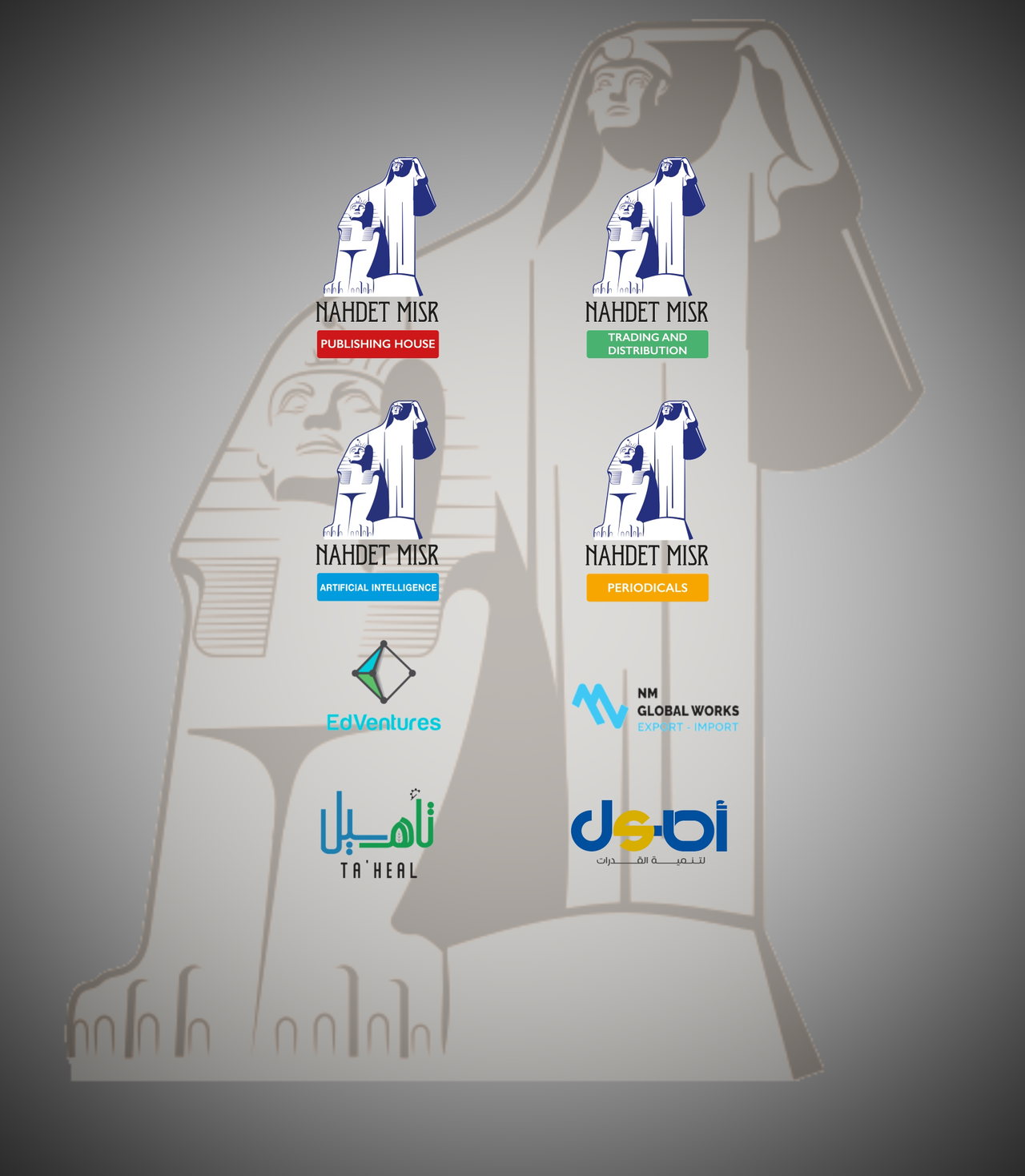
Nahdet Misr (with its 10 subsidiaries) each sit in a different corner of that picture. Nahdet Misr works on learning solutions at scale, EdVentures works with startups pushing the boundaries of technology and new models, and Ta’heal focuses on vocational skills and employability. When these pieces speak to each other instead of working in silos, that’s when an ecosystem becomes real.
"A living network where formal education, cultural content and technology work together"
But there is also a very specific publisher dimension to this ecosystem. We don’t only produce textbooks; we also publish cultural books, literature, children’s stories and knowledge books that shape how people think and imagine. And we no longer do that only in printed format. We develop multiple formats of content—print, digital, audio, interactive, video—so that people can engage with ideas in the way that suits their lives.
In that sense, publishing is not just serving “students”; it is serving individuals throughout their lives, making sure they are constantly exposed to new knowledge, new perspectives and new skills. This is how I see the ecosystem: a living network where formal education, cultural content and technology work together to support a person’s growth, not just their exam results.
Which initiatives by Nahdet Misr Publishing House have been especially successful as part of an ecosystem?
Three key areas come immediately to mind.
First, our work on national K–12 curricula in Egypt. We went beyond delivering textbooks to co-design full learning journeys alongside the Ministry of Education—spanning print and digital content, TV-based learning, teacher guides, assessments, and large-scale training programs. Building on that foundation, we also partnered with the Ministry of Higher Education and USAID on a complementary initiative that strengthened the reform ecosystem by supporting Faculties of Education through student training, reviewing academic programs, and delivering professional development for faculty educators. This work was only possible because we operated at the intersection of policymakers, teachers, universities, and our in-house publishing and digital teams—approaching education transformation as a system, not a standalone product.
Second, the transformation of technical education through Ta’heal. There we bring together TVET authorities, school leaders, employers and international partners to redesign curricula, train teachers, run applied technology schools, and support graduates into jobs. It’s a very concrete example of an ecosystem: education, private sector and government working together around skills and employment, not just certificates.
When a publishing house becomes an ecosystem builder
And then around all of this, EdVentures connects us to a new generation of EdTech and skills startups. We can pilot their solutions inside our projects, give them access to real classrooms, and help them scale if we see real impact. They close the gaps in the education sector that we don’t operate in. That’s when a publishing house becomes an ecosystem builder.
Building an ecosystem often means building bridges. How have you succeeded in connecting different stakeholders in the education sector?
A lot of our work involves translating between worlds that usually don’t speak the same language: ministries and startups, teachers and technologists, investors and educators. To genuinely connect these stakeholders, we have to go deep into understanding their pain points and priorities. That requires continuous research and analysis, but above all, open and ongoing dialogue.
Sometimes this is very practical. For example, we might bring a ministry team and an EdTech founder together to redesign a curriculum component or a digital assessment so it fits both the policy framework and the classroom reality. Or we bring employers and TVET schools into the same room to align on what “job-ready” really means, and then we translate that into curricula, teacher training and assessment.
Nahdet Misr in figures
Foundation Date: 1938
Working force: 2,600
Students served annually: 16M
Teachers trained: 100K+
Daily printing capacity: 1.25M
Educational textbooks produced annually: 140M
Startups supported: 95+
Startups funded: 28
Return on investment from startups: 5.4x
Worldwide affiliate entities: 150
International & regional awards: 68
What is your most important advice for other leaders looking to build an ecosystem?
My first advice is: start with the problem, not with your product. Ask yourself, “What systemic challenge am I trying to solve?” In our case, it’s about improving learning, skills and opportunities for millions of young people, not about selling more titles or apps.
Second: accept that ecosystems are messy and slow. You have to be willing to work with partners who don’t think like you, and to invest in relationships that may not bring immediate financial returns. Trust is built over years.
Third: be generous with credit and control. If you want an ecosystem, you can’t always be the hero of the story. You have to let partners shine, celebrate others’ successes, and sometimes play the role of quiet orchestrator in the background.
And finally: measure what matters; impact and long-term sustainability, not just short-term returns. Evolve your KPIs accordingly, and share what you learn. Robust quantitative and qualitative data keeps stakeholders at the table and helps scale what works.
If you keep the learner/human at the centre, stay curious, and remain open to collaboration, the ecosystem will grow around that clarity.
“Building a functional ecosystem therefore requires patience and consistency“
What are the biggest challenges in developing a functional education ecosystem in your markets?
The challenges are exactly what you would expect: education systems are highly regulated and understandably cautious; people are tired of pilots that never scale; and there is still a degree of mistrust between public institutions and private innovators.
Building a functional ecosystem therefore requires patience and consistency. You have to show up over years, not months, and be very transparent about what is working and what is not. Only then do stakeholders begin to see you as a genuine partner rather than just another project.
That is also why I wear several hats. I don’t just run Nahdet Misr Group; I’m actively involved on key boards and councils related to education and entrepreneurship to help give the ecosystem a unified voice and connect stakeholders. I sit on advisory boards and councils including the Egyptian Prime Minister’s Advisory Committee for Digital Economy & Entrepreneurship, Endeavor Egypt, the National Council for Women, and Education for Employment (EFE) among others. And this engagement goes beyond Egypt, as I also serve on the board of the African Women Innovation & Entrepreneurship Organization.
What role does digitalization play in your business ecosystem today in your markets?
At a basic level, it starts with format. We don’t think of a textbook as just a book anymore; we think of it as a blended experience: interactive content, digital assessments, teacher dashboards, learning platforms, and even TV programs. That mix allows us to reach learners in crowded classrooms, in remote communities, and at home with their families.
The second layer is feedback and intelligence. Once your content lives on platforms and tools, you can see how students and teachers actually use it: where they struggle, what they skip, what they come back to. That data feeds into everything — improving the next edition, redesigning teacher training, and even informing which EdTech startups we choose to support.
“AI is now transforming our operations end to end”
In vocational education and lifelong learning, digital tools are what make flexibility possible: people can learn on the job, on their phones, and through blended programs that fit their real lives. But I always emphasise: technology is an enabler, not a magic solution. If you don’t invest in teachers, high-quality content, and solid support systems, even the best platform will fail.
On top of this, AI is now transforming our operations end to end. We are integrating AI into: production optimisation, layout and design, translation and localisation, curriculum and course development, assessments, proofreading, and editing.
How will AI change the industry as a whole?
AI will be a major catalyst for our industry in two key domains:
On the one hand in education, in terms of personalized learning paths and AI tutors, intelligent assistants for teachers and learners, interactive, immersive learning experiences, automated, adaptive assessment and faster, richer content creation.
On the other hand in publishing itself, in terms of interactive and immersive storytelling, predictive insights on reader trends and markets, human–AI co-creation of content, highly personalized “made-for-you” products, greater accessibility and inclusivity across languages and formats, smarter monetization models and cross-platform experiences as well as data-driven decision-making across the publishing value chain.
So for us, digitalization — and now AI — is not a separate project. It’s the infrastructure that underpins how we create, deliver, and continuously improve learning and content.
You have already mentioned your EdTech activities. Where do you see the greatest potential for exchange between publishing and EdTech?
Publishing and EdTech need each other. Publishers bring a deep understanding of curricula, pedagogy, language and culture. EdTech brings new formats, new business models and real-time data. The real opportunity lies where these strengths intersect.
"In many rooms I was the only woman at the table"
Imagine a storybook that doesn’t just live on a shelf, but lives as a whole world: a printed book, an interactive app, a series of short videos, teacher resources, activities for families at home, and even AI-powered reading support. Or think of a vocational module that moves seamlessly from paper to simulator to workplace, with data flowing back at every step so we can see whether learners have actually mastered the skills.
For us as a group, the exchange goes even further. We bring more than 85 years of know-how, global networks and strong partnerships. Startups bring fresh ideas, speed and solutions that close important gaps in both education and cultural sectors. When we work together, we can deliver large, complex projects while also building long-term learning relationships with schools, governments and learners.
How has your role as a female CEO in a male-dominated industry influenced your work?
I started my journey at a time when there were very few women leading in publishing, education or investment in our region. In many rooms I was the only woman at the table, and many people openly doubted my capabilities. That experience shapes you. You learn to be extremely prepared, very clear in your vision, and incredibly resilient.
It has also made me much more intentional. I don’t want the next generation of women to feel that leadership is something unusual they have to constantly justify. Inside Nahdet Misr, I push hard for women to be in decision-making roles, not just operational ones—and today, 40% of our top management at Nahdet Misr are women. We invest in their development and work on policies that help women grow and stay, not grow and leave.
How do you specifically support women and young female entrepreneurs in your network?
With entrepreneurs, my support is often very personal: mentoring young women who are building EdTech or impact-driven businesses, introducing them to investors, giving honest feedback, and opening doors whenever I can. Through our programmes, we also make a deliberate effort to back women-led startups and initiatives that have a strong impact on girls and women.
40% of the founders across EdVentures’ portfolio are women
I’m proud that 40% of the founders across EdVentures’ portfolio are women, and that our startups collectively serve over 5 million users—around half of whom are female. Even more inspiring is that these companies have created more than 3,000 direct job opportunities, with 60% of those roles filled by women. A key program in EdVentures, in collaboration with MasterCard Foundation, to support youth and startups, focuses on women empowerment.
To further support women beyond my own organization, I serve on the board of the National Council for Women (where I chair the education committee), sit on the board of the Women Entrepreneurs Network (WEN), and have recently joined the board of the African Women Innovation & Entrepreneurship Organization. This allows me to advocate for women’s leadership and economic participation at both the national and regional levels.
Which international partnerships play a key role in your ecosystem?
On the publishing side, we’ve worked for many years with global content and entertainment brands such as Disney, National Geographic, DK, Scholastic and others—co-creating and localizing content for Arab readers, and also taking regional content abroad. These collaborations taught us how to move ideas and stories across languages and cultures without losing their essence.
“The key is that these partnerships are truly two-way”
In the startup and EdTech space, we partner with global foundations, investors and thought-leadership platforms that help our entrepreneurs gain visibility and access beyond their home markets. A very successful example is our partnership with the Mastercard Foundation, through which we launched the Mastercard Foundation EdTech Fellowship in Egypt, supporting over 36 startups in three years with intensive training, mentorship and funding. We also run the EdVS program in collaboration with the Challenge Fund for Youth Employment (CFYE), supported by the Dutch Ministry of Foreign Affairs.
On the skills and TVET side, we work with international TVET institutions such as the Finnish company OEP to provide accreditation. We operate applied technology schools through a public–private partnership model with the Ministry of Education and Technical Education and various private-sector partners, including banks and large companies such as Orascom. We also collaborate with private-sector partners like the Jaz Hotel Group, which owns and operates many hotels worldwide, to provide technical training and real employment pathways for students. In addition, we partner with organisations such as the ILO and the European Union to further strengthen employability outcomes.
When it comes to large-scale projects and initiatives, we work with key international partners like UNICEF, USAID, UNESCO and KfW to design and implement major education projects.
What is crucial about these partnerships?
For me, the key is that these partnerships are truly two-way. We learn a great deal, but we also bring our experience of working at scale in very challenging environments. That perspective is valuable, and it allows us to create solutions that are both globally informed and locally grounded.
What can western book markets learn from the developments in the publishing business of the MENA region?
I believe the challenges we face in MENA actually shape more resilient, innovative and flexible companies and startups.
One important aspect is how to innovate under constraint. When you work in systems with limited resources, very large student populations and unequal infrastructure, you are forced to be creative and efficient. Mobile-first solutions, blended learning and community-based approaches are not “trends” for us; they are necessities. And these approaches are becoming increasingly relevant everywhere.
Dalia Ibrahim is CEO of Nahdet Misr Publishing House. Under her leadership, Nahdet Misr has grown into a regional leader in integrated learning and publishing solutions. Its portfolio spans cultural publishing, curriculum development, digital learning, teacher training, technical and vocational education, and support for EdTech innovation.
Dalia has played a central role in enriching the Arab cultural library with thousands of titles for children and adults, while reviving and reintroducing literary classics to promote heritage, diversity, and intellectual curiosity.
Her pioneering efforts have also extended to innovation and entrepreneurship. She launched the region’s first EdTech-focused corporate venture capital arm, supporting hundreds of entrepreneurs, investing in 24 startups, and mentoring emerging changemakers in education and culture.
Most recently, she has spearheaded large-scale skills development initiatives focused on technical education, helping address youth unemployment and aligning education with evolving workforce demands across the region.
Photos: Canon