individual books for gen z & co.
How Elanders, Thalia and Gräfe & Unzer are rethinking the publishing business
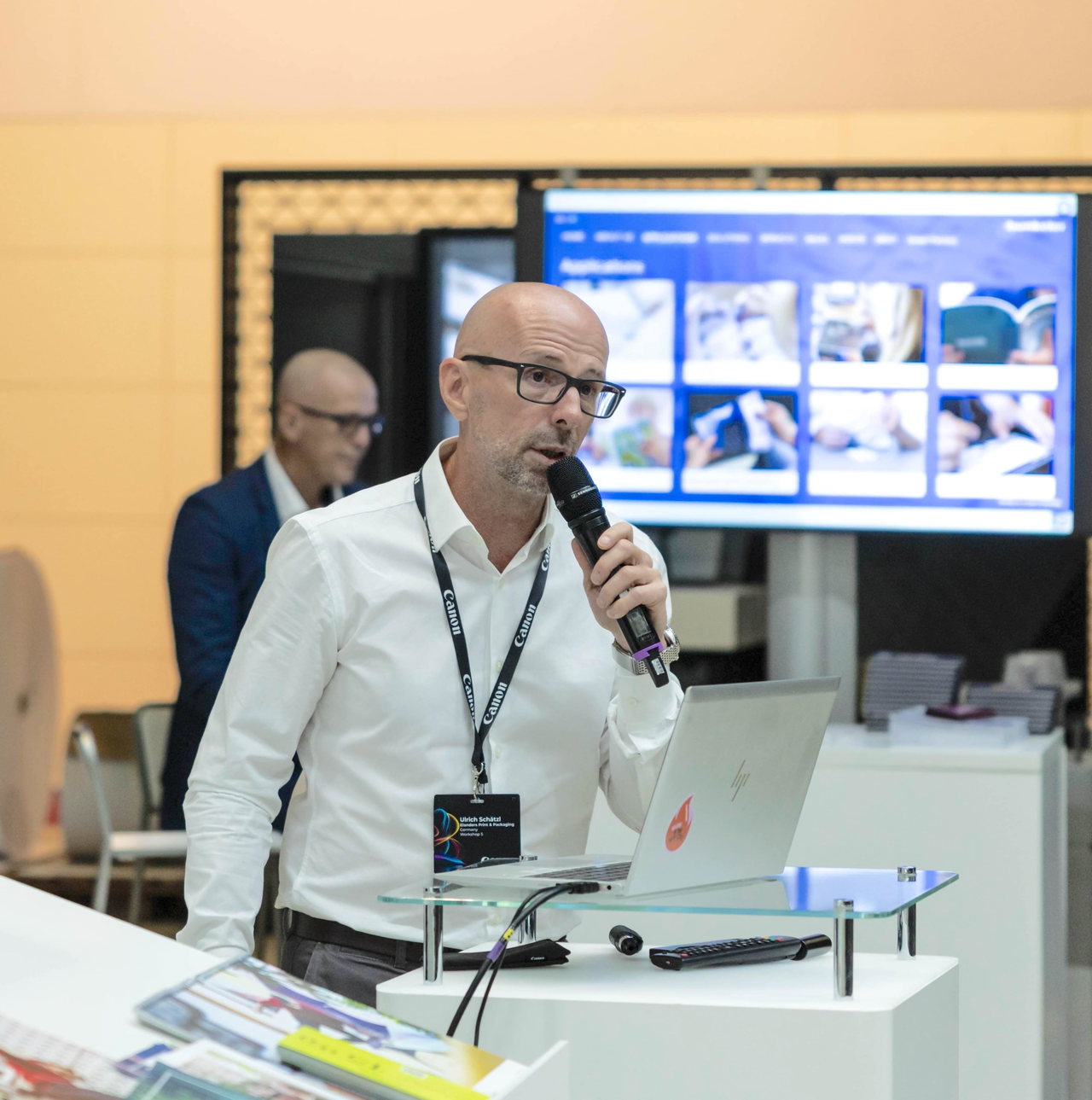
A conversation with Michael Then, Head of Licence & Content Solution, Gräfe & Unzer Verlag, and Ulrich Schätzl, COO of the Print & Packaging Elanders Group, about the future of digital printing, the cooperation between Elanders and Thalia, and new business models through personalization and AI in the publishing sector.
What impressions and economic expectations are you carrying as you head into the final stretch of the year?
Ulrich Schätzl: This year, we needed to consolidate our offset locations in Eastern Europe, as we are observing a decline in general demand for high-volume, identical offset products. For inkjet and digital sectors in photobooks and book publishing, on the other hand, we're seeing incredibly positive trends. We're seeing very strong increasing demand and have now also reached capacity limits for reinvestment. This means there's a clear trend for us: Digital in smaller print runs – including 2,000 or 3,000 copy runs – is definitely positive. For runs exceeding 10,000 units, we need to consider whether it makes sense to operate there in the future.
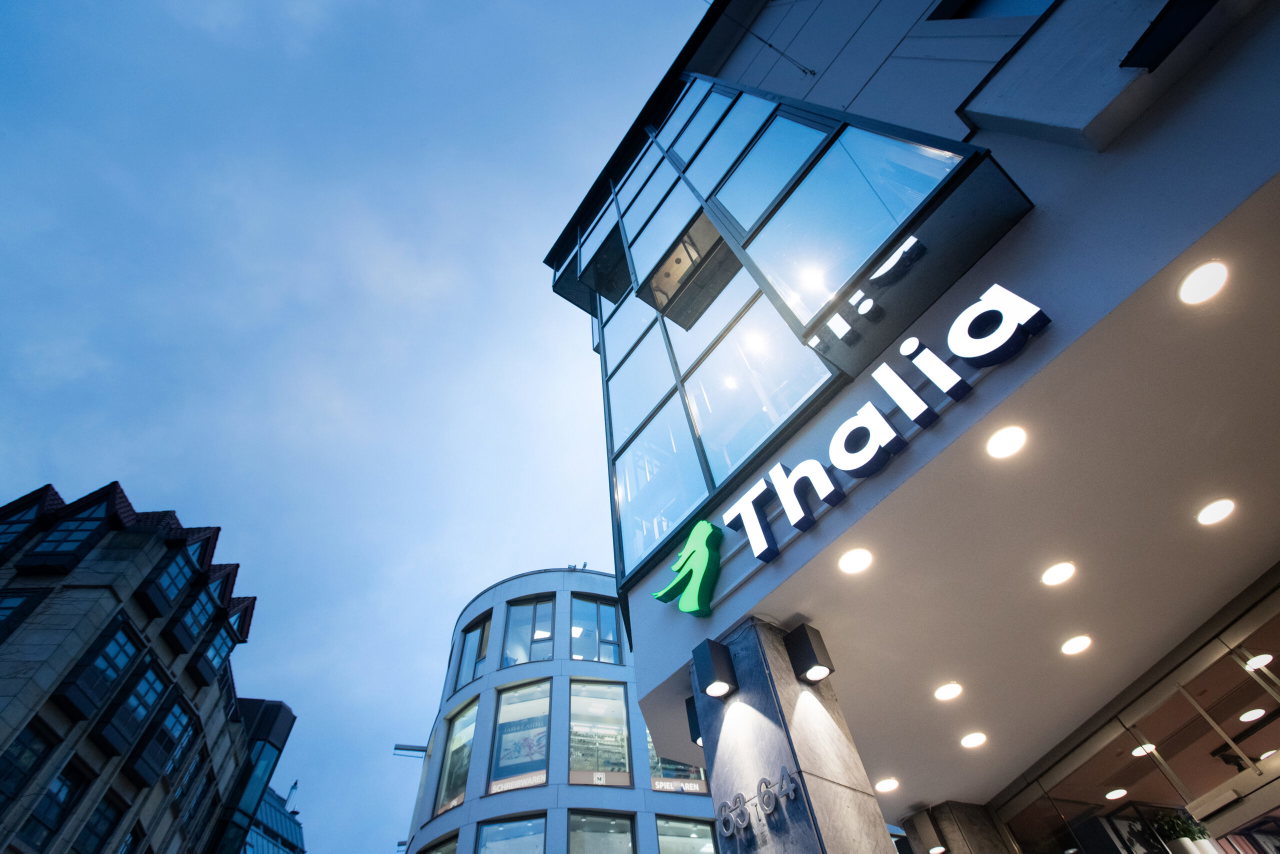
Thalia and Elanders open joint digital printing centre in Marl
How does the situation look for Gräfe and Unzer?
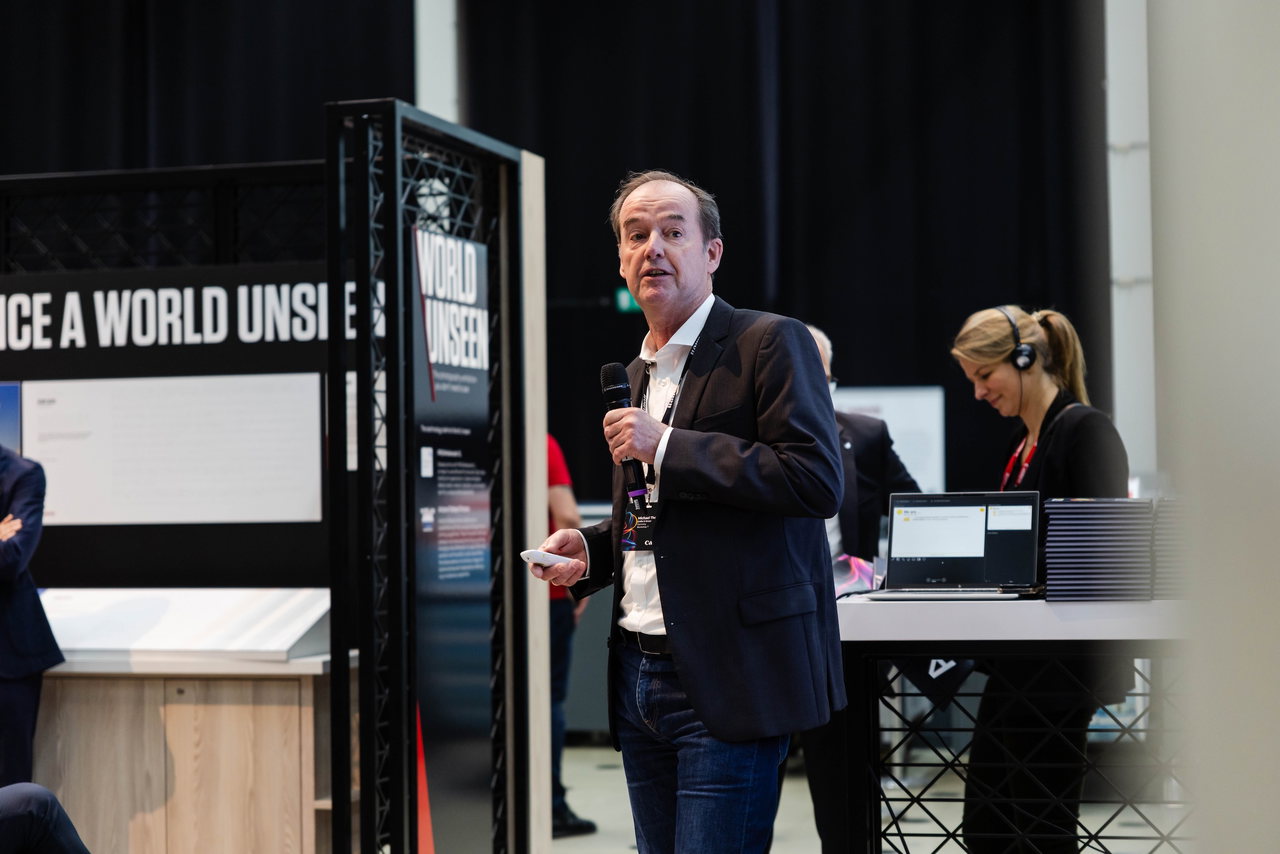
Michael Then: We’re observing a significant decline in the trade book sector, which is quite alarming. Currently, we’re only at just a little more than 40 percent. Additionally, we’re witnessing a surge in direct business. This prompts us to contemplate the validity of business models as we understood them in the 19th century, characterized by the manufacturer and the distributing trade. If these models remain relevant, under what conditions do they continue to be effective?
The second aspect we’re observing is that, given the current consumer climate, which remains relatively low, people are very cautious when purchasing books. They either seek only the absolute best—such as the Spiegel bestseller—or they prioritize books that directly address their professional needs, as they have a genuine use case and a real need for them.
Of course, this doesn't make things any easier for a guidebook publisher like GU. Overall, we also lack visibility. When the book fair opens, there is a big opening speech – it's always about literature. It's never about guidebook publishers. We are, to put it bluntly, the nation's advisors. We explain how child-rearing works and help them design their gardens. We explain to them how to raise children. We tell them what is necessary to ensure that education continues to work in the next generation. But this does not really resonate in the public perception. And that, of course, makes it difficult for guidebook publishers like Gräfe und Unzer to achieve the visibility that is so necessary to even be noticed in this huge conglomerate of attention economy.
So the challenge for us is: how do we attract attention? How do we manage to get our content across? And how do we convince our customers that the money they spend on it is a good investment?
Guidebook publishers lack visibility
Are you under additional pressure from the AI revolution because users ask AI chatbots self-help questions in particular?
Michael Then: That is supposedly a problem. If I define AI as a large language model, it only provides the statistically most probable solution. However, a guidebook customer who wants a cookbook is not looking for the statistically most probable solution for a recipe, but wants to know exactly how the recipe works.
In and of itself, AI is a helpful tool, including for publishers, in marketing, for example, in concept development, in research questions – you can do an incredible amount with AI. It is an extremely helpful tool. However, it still requires the right prompting by a human being – you have to think in advance about what the answer should actually be. And then, of course, you have to interpret what the prompt delivers.
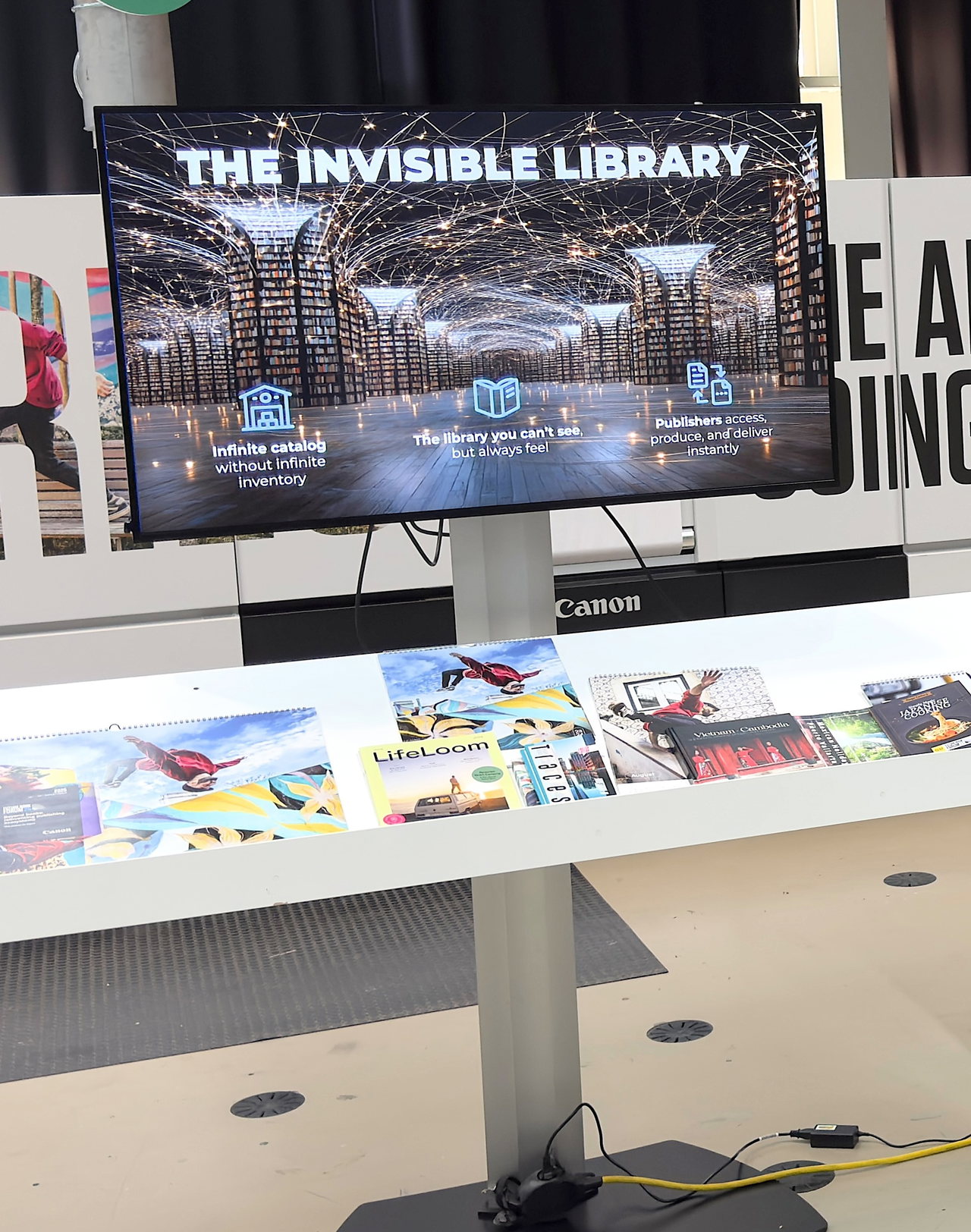
Isn't the problem particularly that LLM providers such as Anthropic have indexed and processed book content from illegal sources for their trainings on a large scale?
Michael Then: Sure, the problem of black libraries is immense. When I was a student, there were already pirated copies being sold on small folding tables in front of the cafeteria, but back then it was still manageable. Today, it has become a global business that is incredibly difficult to track. We have few security systems in place for tracking content. You can do that with images using pixels. How do you do it with text? It's difficult. And how much effort does it take to pursue it legally?
Being caught between two millstones – between self-publishing and AI – is either the biggest challenge for guidebook publishers to generate growth. Or slow death. And I say that for us as the number one in the guidebook market.
Let's talk about the opportunities in digital printing. What is the current estimated share of digital print on demand in the German-language book industry?
Ulrich Schätzl: I don't have any reliable figures at the moment, but I would estimate 10 to 12 per cent. But that also means there is huge potential.
How can book publishers tap into this? How does PoD work in the automotive sector, for example, where Elanders is much further ahead with digital printing of operating instructions?
Ulrich Schätzl: In the automotive sector, there are predictions of how many cars of a particular model will be built each year. Based on this, calculations are made as to how many operating instructions will be produced, how and when, i.e. using offset or digital printing. This results in a price per page. Elanders has been doing this for many years and has good historical data for precise calculation.
‘Smart flat pricing’ takes the pressure off publishers
Unlike in publishing?
Ulrich Schätzl: In the publishing world, the calculation will certainly still cause us some difficulties and require capital investment because we lack extensive historical data. But as a listed, well-capitalised company, we can go down this route and take the time to do so. Our goal is to free the publisher from the burden of this decision: should I print 2,500 copies now, or can I do five runs of 500? We offer what is known as ‘smart flat pricing’, a uniform price regardless of whether the publisher prints the entire print run digitally or in several steps. We want to give publishers the opportunity to be flexible and agile and change the content of books from time to time.
Can you outline the customer journey that is made possible by your cooperation with Thalia?
Ulrich Schätzl: For example, a customer comes into a Thalia brick-and-mortar store and finds a book. Ideally, the publisher had the book printed in a smaller digital print run using smart flat pricing, so that it is available in Thalia's retail stores and logistics centre. That's journey 1.
Variant 2: The book is not in stock in the store or in the logistics centre. The customer orders it in the retail shop or online. Thanks to integrated print production and logistics, it is delivered to their home or to the retail store for pick-up overnight or overnight plus one day.
What gears are working together in the background?
Ulrich Schätzl: Let's stick with the retail store: the customer places the order, which is routed to Elanders via the Thalia logistics system. The print data is ready and waiting. The book is produced, goes to Thalia Logistics and is delivered to the retail store via the omni-channel hubs by book delivery services. Or it is delivered directly to the customer via B2C dropshipping – whoever the carrier may be at the time. The customer receives the book with the invoice from Thalia just in time.
New business models become possible
What new business models or book products does this approach make possible?
Michael Then: First of all, I can optimize existing business models in this way. The guidebook market has recently become increasingly volatile, which means that the sequences of how long the advice in the book remains valid are becoming shorter and shorter. As a publisher, I now have the opportunity to make the process liquid and adapt the sequences to the corresponding needs or changes. These changes may be legal or epistemological – medical knowledge doubles every seven years, which is incredible. The customer buys the book, for example, and in a second step, the digital component may be updated. This is already an interesting new business model because you don't have to wait three years for the next book to be published.
The next new business model is the personalized approach: The customer says: I would like to have the book in a different format, as a hardcover with a ribbon bookmark, perhaps also with a personalized foreword – for a wedding or birthday. The customer may be willing to spend a little more money on this than on the actual standard product.
The third business model is even more flexible: What if it were possible to create a new book for me, assembled from different components of existing books? In a nutshell: the publisher has a database of recipes. The customer says: My grandmother is a huge fan of beetroot. I'm now creating a beetroot cookbook of the finest quality, with ‘warm regards’ from Michael, the grandson who would like to inherit grandmother’s money, and with my own photos. Technically, this is actually a relatively simple step. No prior technical knowledge is required, and all I really need to do is set up a payment system that most people are completely familiar with today – whether that's PayPal or credit card. Dropshipment delivers directly to the customer and no longer needs to be handled by an intermediary service provider.
The content suddenly becomes so fluid that it can be poured into any vessel – thanks to the technical possibilities, in the same quality standard that the customer is accustomed to, especially in the 4C area. Publishers can open up a whole new business in this way.
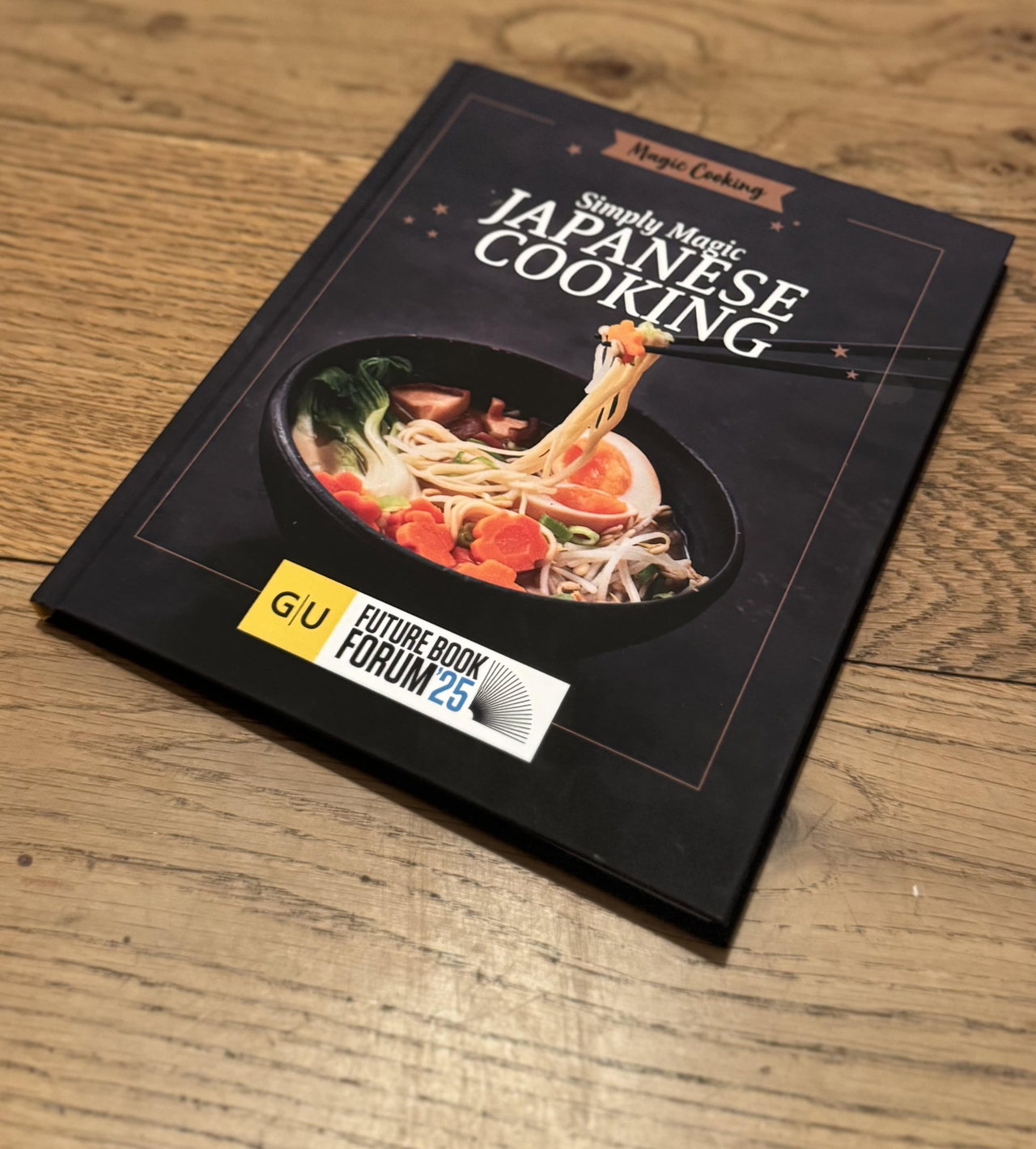
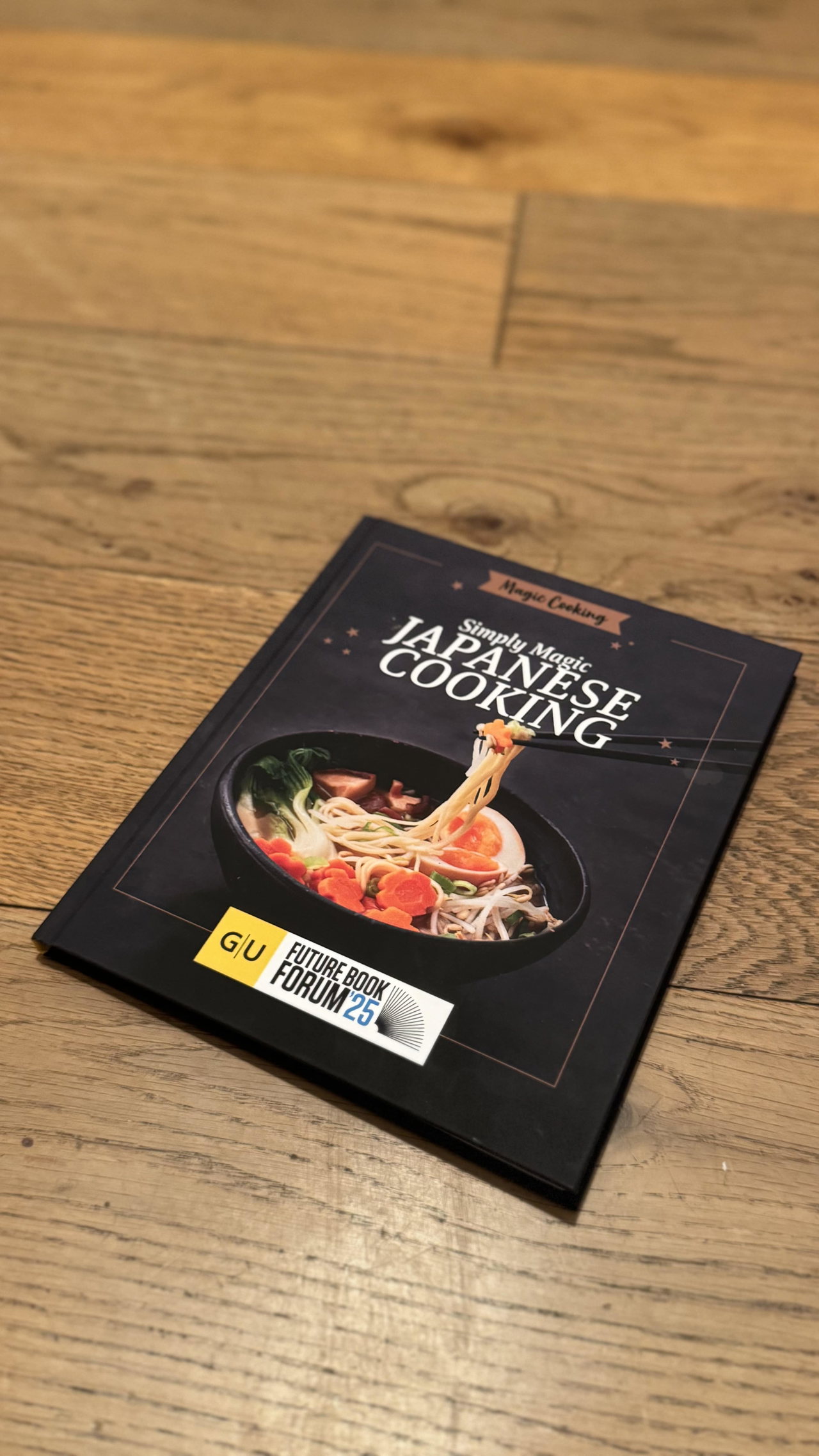
Gräfe und Unzer offers personalized cookbooks
Personalisation is old hat in the book industry. Why is the topic becoming so hot right now?
Michael Then: When I look at how our society is currently developing, we increasingly have a society that is eagerly striving for individualization in every area, from clothing to individual work-life balance. If, as a publisher, I continue to insist on dictating to the customer what the book should look like and at what price they can get it and when, then I am no longer state of the art.
In three years, Gen Z will generate around 30 per cent of the gross national product in Germany. It is therefore crucial for publishers to take their individualization wishes into account. Why is Netflix booming? – I watch what I want, when I want, how I want. This non-linear media consumption is part of individualization.
Ulrich Schätzl: We now have the technical capabilities in the publishing sector to offer this in an economically viable way. Photo books have been around for decades, based on other technology that is simply too expensive for the book publishing segment. With inkjet technology at this level of quality, combined with our experience in post-processing in the photo sector, we are now ready to do this on the manufacturing and production side.
What are the technical requirements for personalisation and granularisation in publishing houses?
Michael Then: Ultimately, nothing new: content management systems are needed. What may need to change is the mindset of the editorial or publishing team. They often say: if you say A, you eventually say book, and that's what we're working towards. But now I actually have to get the editor to say: if you say A, you only say A for now. In other words, the content is created first, in collaboration with the author, and it is already highly granular. An interview that might be an info box in the book can be taken out to generate leads on social media and spark interest in the product.
Create books quickly and precisely with granular content
As a publisher, I should tag all content pieces with metadata so that they can be found and reused as quickly as possible using the appropriate functions. This approach is particularly interesting for guidebook publishers: a single recipe costs me between EUR 200 and EUR 250 to develop – monetising that through a book is incredibly difficult if I have 100 recipes in a book. But in terms of granularity and scalability, it makes for a sensible business model.
In the guidebook sector, especially when it comes to health or cooking, influencers are increasingly setting the trends. I already wrote books on apple cider vinegar 30 years ago, and now I'm doing it again because some influencer said apple cider vinegar is super healthy. With the right database or content management system, I can immediately extract this content to create a finished product for this market in a week. In the end, I might only sell 1,000 copies, but with a net return of over 30 or 40 per cent, because all the substances are already there.
And because new price thresholds can be targeted with personalised books?
Michael Then: That's exactly the point. When curating, I currently start from an estimated price – but based on what? Past experience. We use the past to explain the future. That can work. But it might be smarter to calculate the future from the present by simply asking customers: What are you willing to pay? What is a recipe worth to you, or what are ten recipes worth to you? Perhaps the currency is no longer monetisation, but data and information? Perhaps this will be much more important as a business model for publishers in the future: explaining to bookshops, for example, what their customers really need and in what form it needs to be presented.
With the Elanders infrastructure, it is also possible for publishers to internationalise themselves instead of selling licenses abroad. How do you assess this potential?
Ulrich Schätzl: That is one of the major advantages. As an international print service provider, we cover the Nordics, Central and Eastern Europe, and the UK, for example. It is, of course, a huge advantage for our customers to say: connect once, distribute many. The same is possible in the publishing sector. We may need to catch up in terms of machinery in some areas, but that is simply a matter of doing it.
And when we cross the pond to America – that's also possible because we have two locations there. They have their own market laws that cannot simply be transferred from Europe to overseas, but we can act together.
Michael Then: This perspective is totally fascinating because, unlike in the video sector, we don't have any boundaries, but rather a free flow. The question is therefore more: How many languages will be interesting for us and the content we have? Guidebook publishers certainly have the problem that, for example, gardening culture in England is very different from that in Germany or Italy. It's similar with cooking: there is little that works globally. Many spices are not available here or are difficult to obtain.
It is not only in the area of personalized books that there have been few showcases to date. The same applies in principle to the entire field of programmatic print – the fully automated production of highly personalized printed matter based on marketing automation workflows with the aid of modern high-speed digital printing systems. Why is that?
Ulrich Schätzl: Creative people lack the creativity to see what can come of it. The ideas we delivered as a print service provider may not have been perfect, but it would have been up to the creative people to develop them further. We never really got anywhere with that.
Final challenge: hardcover books
Michael Then: There is a lack of courage to follow the relatively simple principle of ‘just do it’, in both senses of the word: make it as easy as possible so that everyone can participate, and just get started. Beckett once said: ‘Ever tried. Ever failed. No matter. Try again. Fail again.’ That still holds true.
Are there still hurdles that need to be overcome in the coming years to make these digital books even better?
Ulrich Schätzl: Some things are limited by technology: inkjet, the key to publishing, contains water, and water and paper don't really mix. There could be developments in the drying process: with less water, less heat, simpler overall. We're done with softcovers; they work in every format. With hardcovers, the challenge remains the book covers: how do you produce them in a highly variable manner? As things stand today – no. But I am sure that this will be possible tomorrow, as early as 2026. If manufacturers can then get a better handle on the issue of ink and water, we will be in a perfect position.
Michael Then has been responsible for licensing and content solutions at Gräfe und Unzer since 1 October 2024. Most recently, Then worked at Weltbild as Head of Category Management Media. In this role, he was responsible for the overall strategy of the book and media business, licensing and product purchasing across all media formats, the digital product strategy and the company's Tolino alliance. Michael Then previously held positions at Elsevier, Piper, Penguin Random House, Ullstein, Heyne, List and Callwey.
Ulrich Schätzl came into contact with the printing industry at a young age through his parents' business. After graduating from the Munich University of Applied Sciences with a degree in printing technology, Ulrich's path led him to a large and renowned printing company in Bavaria, where he held various positions. In 1997 Ulrich returned to his parents' company and 6 years later took over sole responsibility and management. Since July 2021, Schätzl has been part of the Elanders Print & Packaging Division headed by Sven Burkhard and as Chief Operating Officer, Ulrich is responsible for operations within the Elanders Print & Packaging Group.
Photos: Canon