identifying opportunities in the business ecosystem with the "ecosystemizer"
Julian Kawohl's Ecosystemizer approach represents a paradigm shift from classic product thinking to domain-based ecosystem thinking and calls on companies to see themselves as part of dynamic business ecosystems and to act accordingly. The Ecosystemizer framework provides a structured basis for locating your own company and strategic positioning.
From product focus to ecosystem thinking
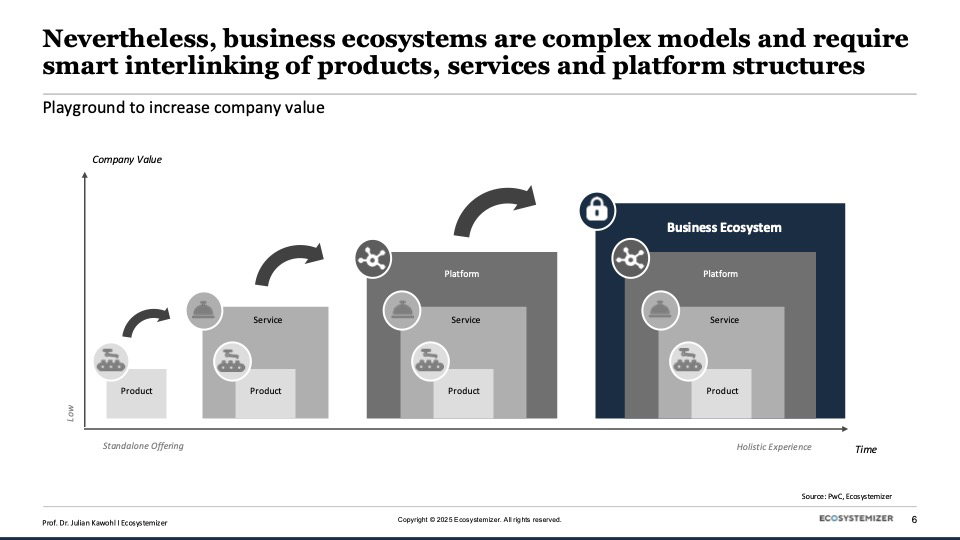
Instead of operating in isolated industries, companies today should be active in wide-ranging domains such as mobility, health, or well-being. These domains overlap and require cross-sector collaboration to solve complex challenges and create collective added value. According to Kawohl, the traditional perspective—product efficiency and optimization—is no longer sufficient on its own, as it limits the potential for innovation.
Unlike platforms that merely bring supply and demand together, the ecosystem goes far beyond this. Kawohl compares it to a club: the dance floor is the platform, while the ecosystem brings together guests, staff, infrastructure, catering, and much more, all of which only work together in this interaction.
Collaboration as a driver of innovation
Kawohl emphasizes that no company can overcome today's multifaceted challenges alone. Only the collaboration of various players and openness to external perspectives enable real progress. While many employees in a company focus on efficient processes, it is innovators in particular who enable change with new ideas and perspectives.
While Michael Porter's classic competitive strategies (“Market-based View”) have long shaped companies, Kawohl adds to these the need for cross-domain cooperation (he calls this perspective “Domain-based View”). In the future, value creation will increasingly come from collaborative ecosystems, not just from competition in market or product areas.
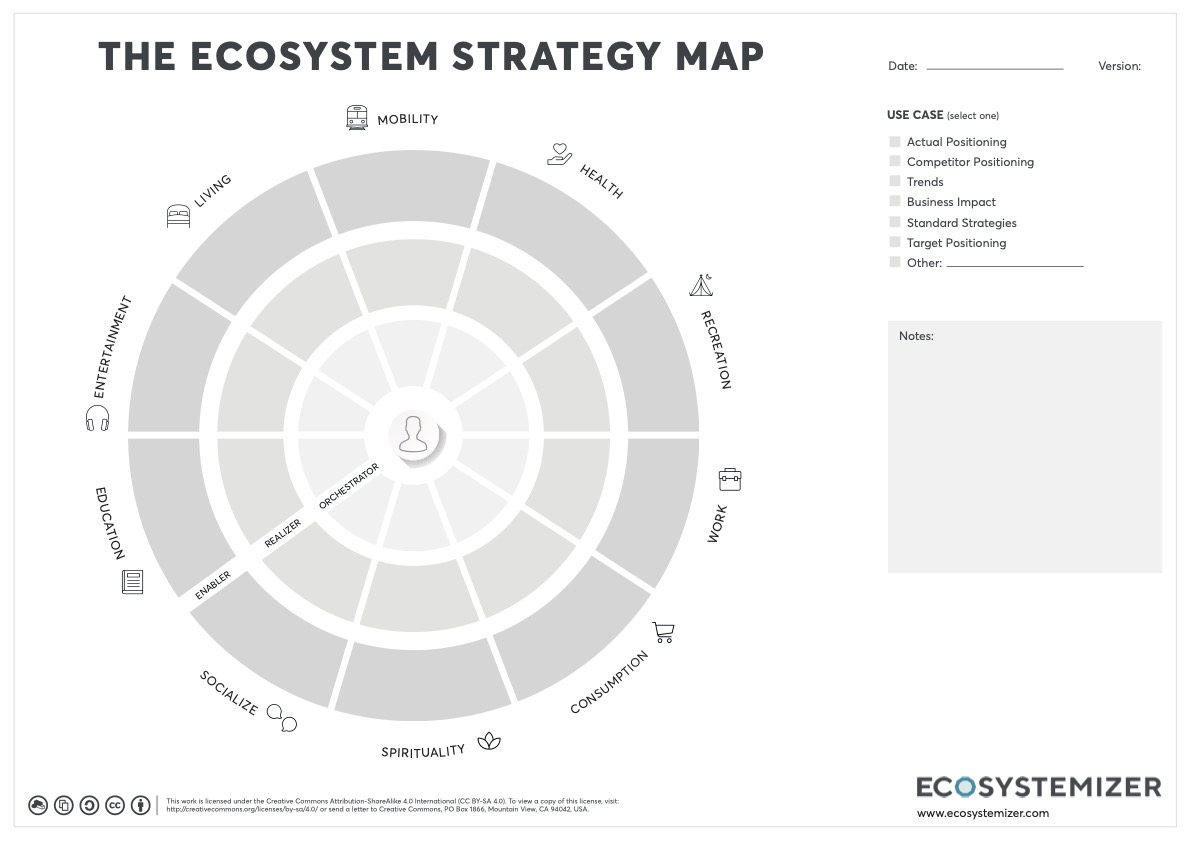
The Ecosystemizer framework
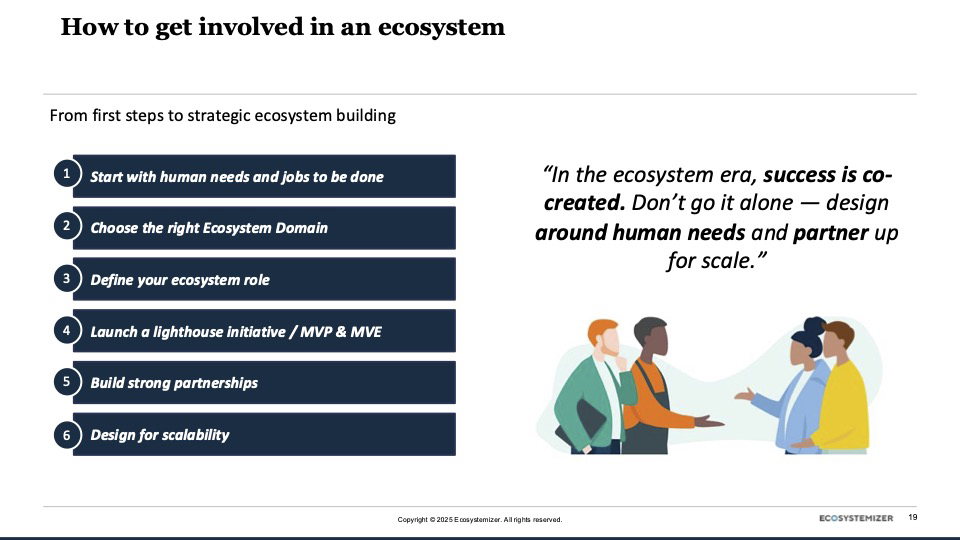
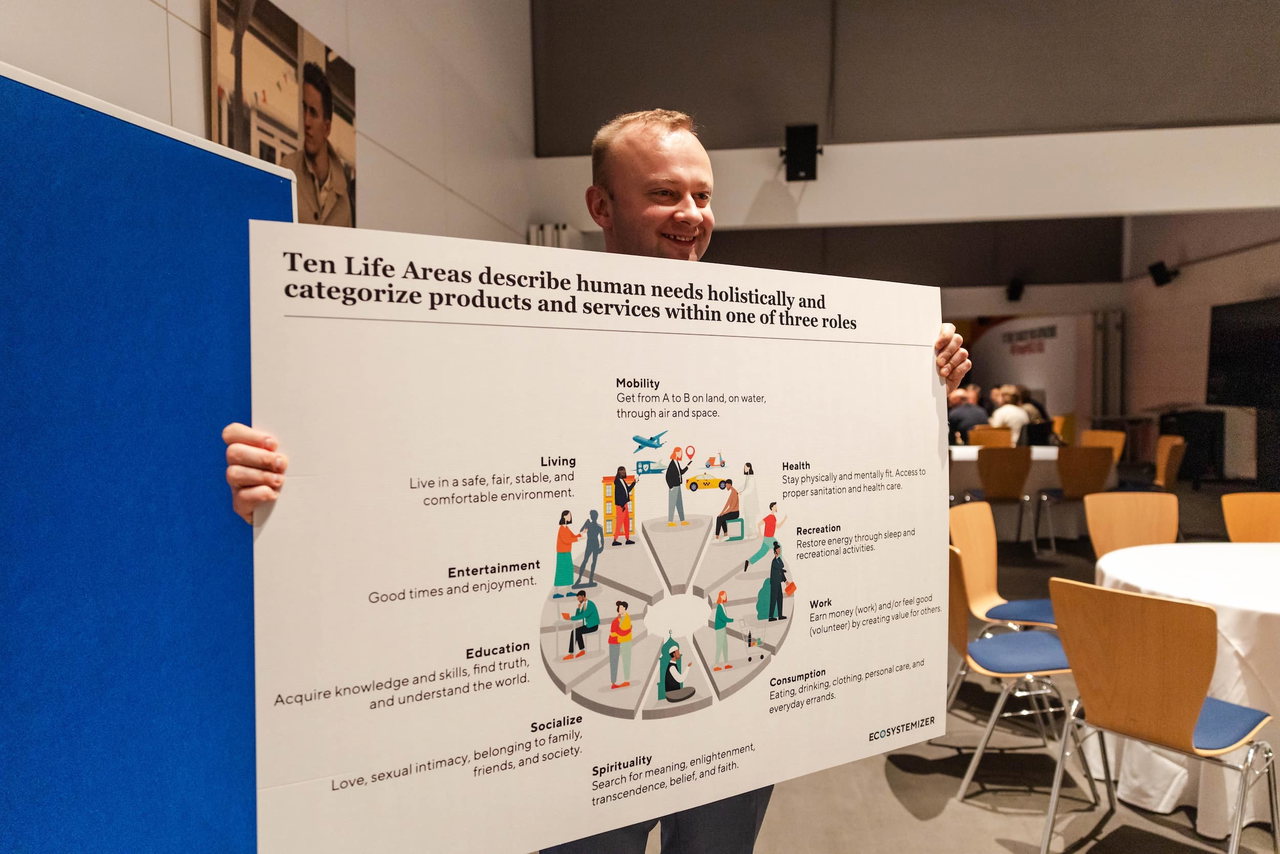
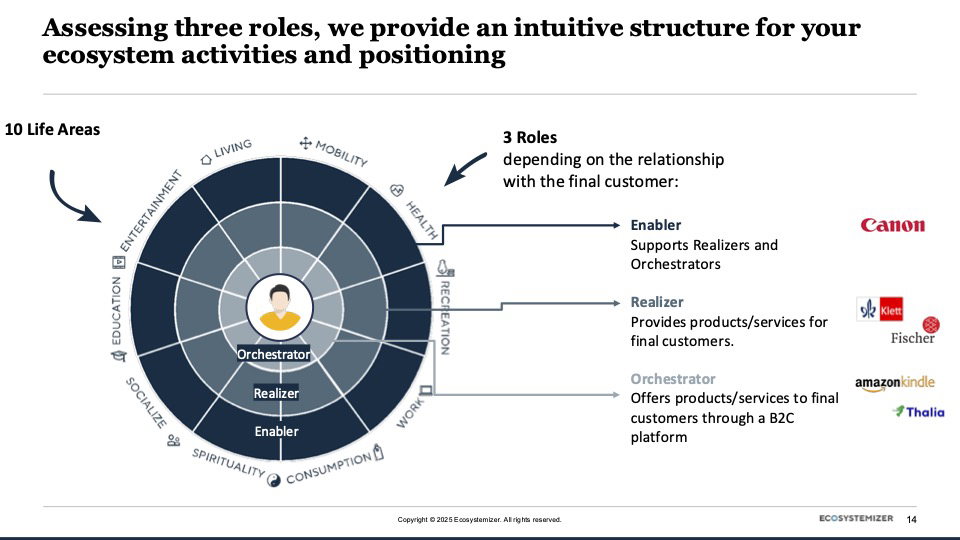
At the heart of this approach is the Ecosystemizer Framework, which helps companies implement change in a practical way. It places the needs and behavior of people at the center of business decisions and explores life areas and domains such as wellbeing to identify growth opportunities. Depending on their strengths, companies can take on different roles within the ecosystem, from orchestrators to enablers. The central question is in which life areas (e.g., mobility, health, spirituality) the company can make a contribution and exploit growth potential.