how megatrends change the publishing world
Analysis and predictions by Peter Fisk
Peter Fisk's report, "Megatrends 2035: The 6 dramatic forces shaking up every market and driving every business to reinvent itself," argues that the familiar rhythms of business strategy have been upended by long-term, global, cross-industry, and inevitable forces called megatrends.
The report's central message, presented at Canon's Future Book Forum, is that these megatrends are reshaping the world at a structural level, creating massive risks and unprecedented opportunities. Success in the future requires embracing a "megatrend mindset"—one of perpetual reinvention, dynamic learning, and proactive transformation, allowing leaders to sense, adapt, and act at the speed of change.
The 6 megatrends driving business reinvention
Peter Fisk identifies six decisive forces that are already shaking up every market and will reach their full potential by 2035, creating the superhighways to future possibilities by driving innovation and growth.
1. Exponential intelligence
Description: This megatrend represents the rapid acceleration of AI and the convergence of technologies like genomics, robotics, and blockchains, shifting progress from linear to exponential possibility.
Impact for publishing:
- Generative AI will fundamentally reimagine creativity, production, and distribution (e.g., writing, translation, design).
- The role of the publisher shifts from managing products to "orchestrating intelligent content ecosystems"—curating, verifying, and amplifying ideas with human editorial oversight.
- Blockchain will enable transparent rights, royalties, and intellectual property protection.
- Examples: Companies like Storytel, Wattpad, and Radish redefine storytelling with algorithmic recommendations; Publishers like Springer Nature and Elsevier use AI to summarise research.
2. Generational remix
Description: Populations are aging rapidly (more people over 65 than under 18 by 2035) and becoming more diverse, driving fundamentally different needs for support and services.
Impact for publishing:
- Publishers must embrace multi-generational, multi-format storytelling.
- Older readers seek meaning and lifelong learning, while younger audiences demand interactivity, speed, and social connection.
- This drives the boom in audiobooks and new formats.
- Examples: The audio business is booming as audiobook listening crosses age and cultural lines; Wattpad Webtoon Studios facilitates Gen Z co-creation of stories.
3. Asian century
Description: Economic shift to the east, and volatility everywhere. Asia is the gravitational center of global growth, projected to contribute 65% of global GDP growth by 2035, leading in innovation and consumption.
Impact for publishing:
- The "global centre of gravity for publishing will shift eastward," driven by digital-first, multilingual readers and massive education spending.
- Success depends on global-local agility—the ability to adapt content for local languages, values, and education systems in collaboration with Asian partners.
- Examples: China Literature (Tencent) generates billions of online reading hours; Indian companies Byju's and UpGrad blend education, content, and community; Japan's Kadokawa Corporation turns manga and gaming into global franchises. Pearson partners with Asian education providers.
4. Regenerative systems
Description: This is a shift that moves beyond mere sustainability toward models that actively restore, replenish, and reimagine the relationship between business and the planet.
Impact for publishing:
- The industry must become regenerative by design to counter reliance on resource-intensive printing and logistics.
- Print-on-demand and digital-first workflows will become standard to eliminate waste.
- Sustainability becomes a competitive advantage, with a focus on green materials and traceable supply chains; the rise of eco-conscious readers "will create a competitive advantage for publishers who can demonstrate true impact."
- Examples: Canon's presses and companies like Gelato revolutionize local print-on-demand networks; major houses like Hachette Livre and HarperCollins experiment with carbon-neutral printing; independent houses like Patagonia Books make sustainability part of their identity.
5. Multipolar world
Description: The world is fragmenting into regional blocs due to economic nationalism, digital sovereignty, and supply chain shocks.
Impact for publishing:
- Global operations must become modular, adaptive, and regional to manage trade restrictions and supply chain volatility.
- The global industry may look less like a few giants and more like a "federation of regional creative ecosystems"—interconnected but locally grounded.
- Publishers must cater to rising cultural sovereignty, where readers demand content reflecting local values and context.
- Examples: Pan Macmillan, Bertelsmann, and Hachette Livre are increasingly decentralizing decision-making; Kobo Rakuten shows how regional strength works with global presence; Cassava Republic Press (Africa) and Planeta (Latin America) amplify local and regional voices.
6. Humanity rising
Description: More purposeful, human, and collective progress. This is a movement toward putting people and purpose at the heart of business, emphasizing trust, wellbeing, and social contribution.
Impact for publishing:
- The industry undergoes a cultural renaissance, as books remain a powerful tool for reflection, empathy, and transformation.
- New audiences emerge, hungry for ideas that inspire, heal, and connect, fueling the growth of genres like personal growth and conscious living.
- "The most successful publishers will be those that help people not just learn more, but live better"—they will act as trusted guides, curating the collective intelligence of humanity.
- Examples: Hay House and Sounds True build businesses around conscious living; The School of Life Press publishes philosophy for the modern age.
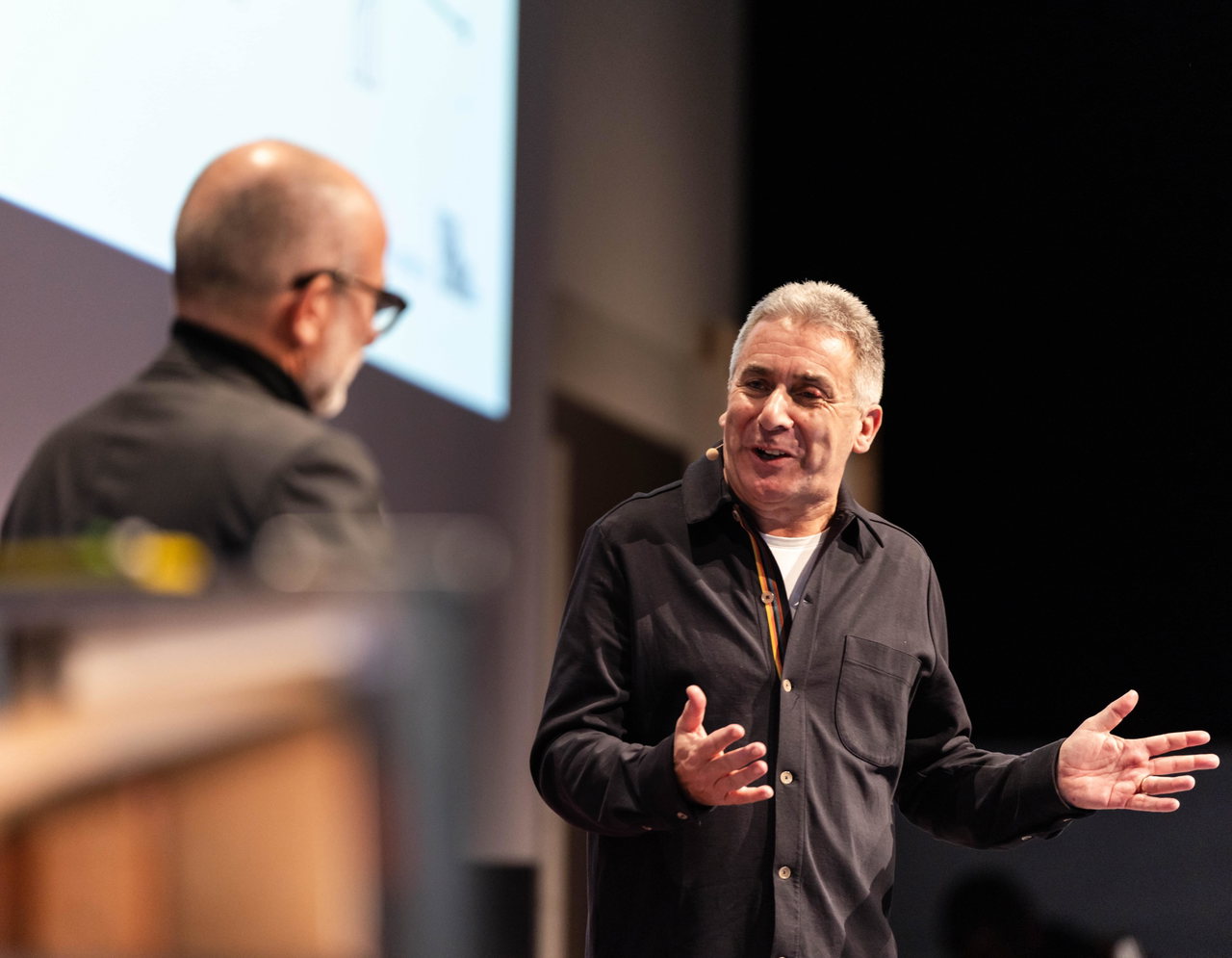
Peter Fisk is a business advisor, author of ten books translated into 35 languages, and an advisory board member of Canon's Future Book Forum. Photo: Canon