
"we think of ourselves as passengers, not owners"
How Planeta's CEO Jesús Badenes balances tradition and innovation in publishing
At this year's Frankfurt Book Fair, Spain's publishing success story was the talk of the trade. With twelve consecutive years of growth, the country has outpaced many European markets. Jesús Badenes, CEO of Grupo Planeta, Spain's largest publishing house, explains the factors behind this remarkable trajectory—from embracing young readers and social media to maintaining flexibility through digital printing.
In a conversation, held at Canon’s Future Book Forum, he draws unexpected parallels between managing a 500-year-old farmhouse and stewarding a publishing empire: both require respecting tradition while continuously evolving. One of Planeta’s recipes for success: “always keep the window open” for new technologies like digital print on demand.
Spain has distinguished itself as a success story within the European book market, recording twelve consecutive years of growth in both turnover and sales volume. What is your recipe for success at Planeta?
It's called the "Spanish Miracle," and it's true—the market has been growing consistently. We have to be modest, though, and acknowledge that our starting point was lower than countries like Germany. Readership levels in Germany were already at 80% a decade ago, while Spain was at around 60%.
Today, readership in Spain has reached 68%. From 2019 to 2025, the Spanish market has grown by more than 30%, and in Planeta's case, it's been more than 50%. As a market, we're doing well.
I think as an industry—not just the big players, but the entire ecosystem—we're working well together. Many small publishers contribute significantly to this growth. But there's one demographic segment that accounts for most of the expansion: people between 15 and 24 years old.
"Spain is one of the most connected countries in terms of social networks"
Ten years ago, this segment read very little. Today, they read extensively. The readership level among 15- to 24-year-olds in Spain is 74%, higher than the national average of 68%. If you look only at young women in this age group, it's 82%. They're reading regularly, and genres like romantic fiction—including books with sprayed edges and special editions—account for a significant part of this growth.
Spain is also one of the most connected countries in terms of social networks, and publishers have smartly used these platforms to promote books. This has created a virtuous circle that has driven market growth.
You used to work in management consulting at McKinsey. If you had stayed there, what advice would you give to the Western book industry today? Which ecosystems are playing an increasingly important role?
I worked at McKinsey for six years before joining Planeta, where I've been for 25 years. Planeta has been my main school. But if I apply the frameworks from my early professional years, I would say: always keep the window open.
We tend to think of the editorial world as very closed. Today, we see that it's becoming less closed, and there's much to gain from external players. We now have many alliances and partnerships. Whether it's companies like Canon for book production, traditional and social media for promotion, or bookshops—both traditional stores and e-commerce platforms—we've been open as an industry to all developments. The same applies to ebooks and audiobooks.
I think this openness has been a key part of our recipe for success.
Which role does print on demand play in Planeta's strategy today?
It's very important. We have more than 70 imprints—some of them specialized publishing houses—and we maintain over 30,000 live titles in our catalog. The only way to keep those titles available is through the possibilities that digital printing offers us.
The traditional industry used to produce only very large print runs. Today, we're democratizing readership and making backlist titles accessible that were previously hard to obtain. We can now produce books in print runs of 200, 500, or 1,000 copies. This flexibility that the printing industry provides is helping us conquer more readers and serve more niche markets.
How important is print on demand especially for your business in Latin America?
I think it's even more important potentially, though the reality isn't fully there yet. In Latin America, the market is thinner than in Spain, and bookshop density is lower. Print on demand plays a very significant role for backlist titles in those markets.
You've mentioned that AI is playing an increasingly important role in publishing. What's your approach?
We think AI is very powerful, but we always see the need for final human intervention. AI is still in progress today. As editors and people who create content, we cannot trust 100% what AI gives us. We still need the work of our traditional editors, which provides something more curated, of higher quality.
At the end of the day, we think human intervention is capital—it's part of our value proposition, and we believe it will remain this way for a very long time.
Let me ask you something more personal. In addition to publishing books, you farm and grow vegetables, olives, and grapes on an old farm near Barcelona. What does this place mean to you?
It's about one hour from Barcelona, in a small town of 500 inhabitants. The farm is a perfect place for reading manuscripts, listening to music, and finding peace. I have three nearby villages of 10,000 to 20,000 people, so commercial needs are covered, but when I'm at the farm, it's a sanctuary.
"In order to maintain, you cannot stick to the basics alone—you have to evolve as society evolves"
I have a large library of more than 30,000 titles there. The house dates from the 16th century, and we feel an obligation to maintain these properties. I haven't changed almost anything—I've restored some elements, but always following the original standards.
If you live in a house that's almost 500 years old, you cannot think of it as your property. You have to think of yourself as a passenger for 40 years, a temporary custodian. You pass it on to the next generation.
That's a good metaphor for your role at Planeta, isn't it? You have a tradition there too, and you must maintain the traditional book business.
Exactly. You have to maintain, but you also have to be able to add new things. In order to maintain, you cannot stick to the basics alone—you have to evolve as society evolves. That's our responsibility.
Which book have you read lately at your farm that you loved most?
I read a lot of classics, which I love. I also read books we're about to launch in the coming months. But recently, I've been immersed in the classics. If I had to mention one, it would be “Meditations” by Marcus Aurelius.
Being at the farm allows me to read not only novels—which I like and read most of the time—but also essays and poetry. The silence and the environment make it possible to engage with these deeper texts in a way that's difficult elsewhere.
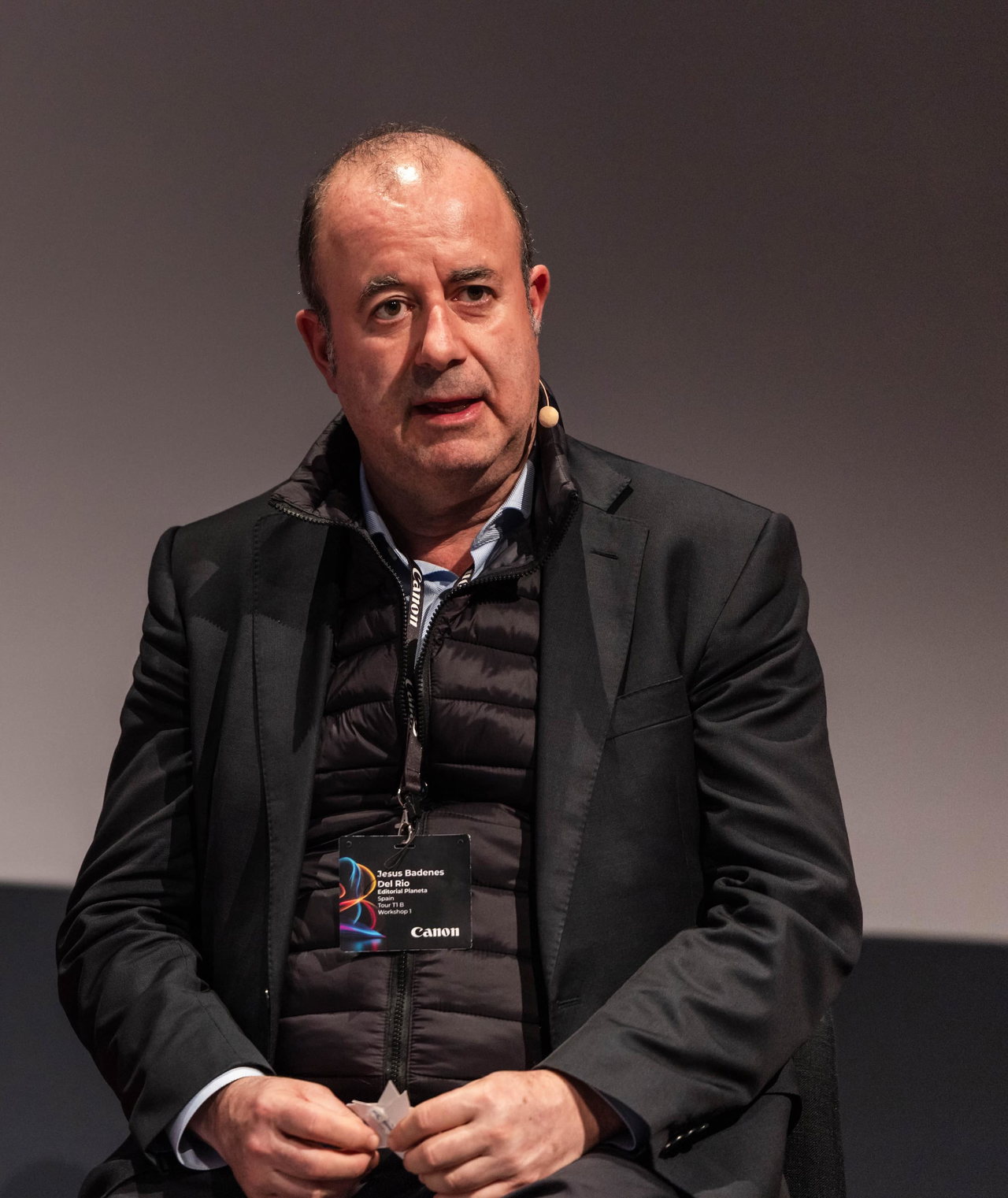
Jesús Badenes is CEO of Grupo Planeta, Spain's largest publishing house with more than 70 imprints and over 30,000 active titles. Prior to joining Planeta 25 years ago, he worked in management consulting at McKinsey & Company.
Photos: Canon