sense and sustainability
Publishing legend Richard Charkin on PoD-based publishing at Mensch Publishing


“The whole catalogue is now available in print and e-book on the basis of just-in-time responsive technology. I am paying roughly twice per copy by using Print on Demand, but the savings in warehousing, distribution, freight, and stock provisions compensate adequately. There are no overstocks. There is no pulping of paper. There are no shiploads or planeloads of books destined for Australia.”
Publishing legend Richard Charkin, who – amongst thousands of other books – oversaw the publishing of the Harry Potter heptalogy at Bloomsbury, tells the story of his cutting loose from the constraints of the print-run-fixated business model that has been holding sway since the days of John Gutenberg – to the detriment of cash flow and our environment. It’s a story of liberation that might get legacy publishers dreaming, too – and should prompt them into probing the value of “just-in-time responsive technology” for their own, ever more difficult, business. What they might win is not only ease but also, and sometimes even more importantly, speed.
When I established Mensch Publishing, the intention was simply to test whether it was still possible to publish books for the general reader which couldn’t necessarily be supported by larger publishers carrying significant fixed overheads.
Starting out like Gutenberg
What I hadn’t factored in was the growing importance of environmental sustainability. The first few books were printed traditionally, stored in warehouses around the world, shipped between the warehouses and to (and from) book wholesalers and retailers. All other activities (marketing, publicity, author acquisition and contracting, editing, proofreading, rights, royalties, finance etc.) were undertaken by me or by freelancers. It worked pretty well and I remain grateful for the help I received, particularly from Bloomsbury.
But I had to face some uncomfortable realities. Despite long years of experience, I was still carrying too much stock: the reprint that was too exuberant; the initial sales not living up to expectations; returns of unsold stock from retailers; difficulties in ensuring simultaneous publication around the world; and the costs of the logistical infrastructure as a whole.
The Move to liberation
Three years ago, I bit the bullet. I moved all manufacturing to print-on-demand facilities. I destroyed all old stock, thus allowing us to empty existing warehouses. I established new trading terms for booksellers at lower than typical discounts and all on firm sale (no returns).
The whole catalogue is now available in print and e-book on the basis of just-in-time responsive technology. Every book is available from the day of its first publication in every territory of the world, coinciding with any media coverage which more and more is globally relevant. Every book is printed to a higher standard than traditional paperback production values (at least as commonly used in the Anglophone world). Publication schedules have shrunk from typically nine to twelve months from manuscript delivery to three months. Now, when a book is sold, it remains sold. A sale is a sale, not a loan. There are no overstocks. There is no pulping of paper. There are no shiploads (or worse, planeloads) of books destined for Australia. There are no lavishly produced proofs being distributed through the postal systems of the world in the hope of reviews.
Of course, there are drawbacks. Booksellers are reluctant to stock the titles except on a customer order basis (I don’t blame them). This throws more responsibility for generating sales on Mensch itself and for a fossil like me challenges my social media skills and, frankly, my patience dealing with journalists who seem to take pride in never responding to emails. The economic formats are limited. Colour is prohibitively expensive, although becoming less so. Very large formats are tricky. This limitation restricts Mensch from children’s books or highbrow art catalogues, for instance.
The unit costs are higher. I estimate that for a black and white paperback with a traditional initial printing of, say, 2,000 copies, I am paying roughly twice per copy by using Print on Demand, but the savings in warehousing, distribution, freight, and stock provisions compensate adequately.
Speeding up the business and saving cash – an example
Also, by shortening the publication schedule, the return on first costs (editing, typesetting, design) is hastened by six months. An example of this would be our recent publication, All Things Connect. The first-time author, Andrew Squire, submitted a sample manuscript on 23 October 2025. We took advice from two experts in graphic book publishing. Both were enthusiastic. We had a Zoom call with the author on 31 October to explain the weaknesses and strengths of our business model. We signed a publishing contract via DocuSign that day. In parallel with editing, we commissioned some design ideas for the cover on 3 November. By 7 November we had choices to make.
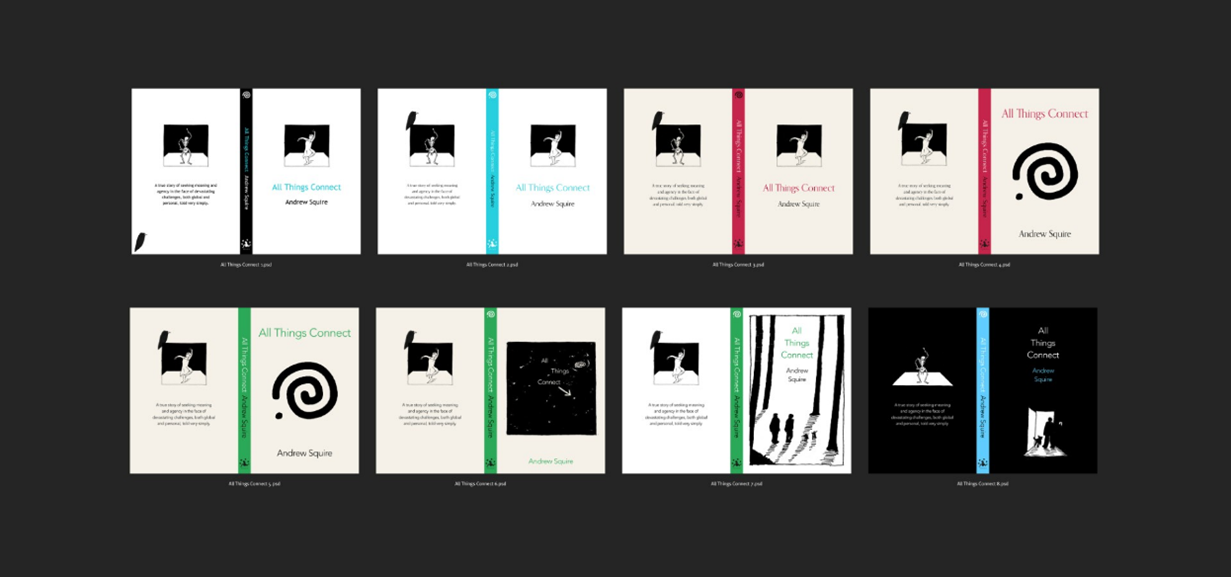
After discussion with the author and designer (note, no overpopulated cover meeting with several conflicting views!) we agreed on the final one by 10 November.
We received quotes for the typesetting and made the selection of an excellent Chennai-based typesetter on 14 November. Everything was proofed, approved, and loaded up onto digital platforms for both editions by 16 December. Meanwhile, we issued a press release, sent emails to the lists of graphic book influencers, key wholesalers and retailers, and potential reviewers in the general media. The book was available for pre-order on e-tailer sites before year end and the first sales were recorded in January.
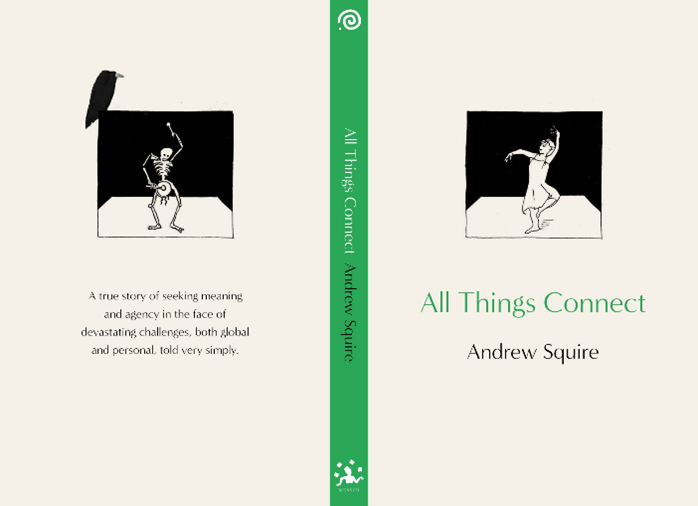
Three months from initial submission to publication – savings for the environment, cash flow improvements, global availability from day one, and supportive comments from everyone concerned with sustainability.
The business value of “just-in-time”
As the publishing industry begins to understand better the importance of cash flow as opposed to notional gross margins, the more the speed of publication matters, not to mention the changes in reading fashions.
Academic publishers have moved to sustainable processes successfully for books, journals, and databases, and it has enhanced not only their bottom lines but also the environment. Despite the drawbacks, it is clear that using digital technology for print and distribution is significantly more sustainable than the traditional publishing routes.
The question for major trade publishers who have deep investments in warehouses and traditional sales forces is not whether to follow the leads of academic publishers or even Mensch Publishing, but how they can best use either modern or traditional business models where appropriate. Perhaps the first issue they have to address is to move their accounting systems (and hence bonus structures) from their focus on print unit costs and gross profit to total landed costs, cash flow, and bottom line.

Richard Charkin is a former president of the International Publishers Association and the United Kingdom’s Publishers Association. For 11 years, he was executive director of Bloomsbury Publishing Plc. He has held many senior posts at major publishing houses, including Macmillan, Oxford University Press, Current Science Group, and Reed Elsevier. In 2019 he founded Mensch Publishing, which he has been leading since then.