„automation and design are not mutually exclusive because good design is based on rules“
Tobias Köngeter on the fundamental transformation media design and production are undergoing
Published: 30.3.2026 | Photo/Video: Youtube
Media production is undergoing a fundamental transformation. Personalization, and a rethink of design processes offer significant opportunities for publishers and media companies. Those who address these topics early can not only work more efficiently but also tap into new markets and audiences. Can design automation be a cure to limited resources on the publishers’ side? Tobias Köngeter, one of Europe’s leading experts in automated media design, production and digitization, discusses the paradigm shift in the media industry, the challenges of small print runs, and the importance of design and automation.
When did you first realize that media production could be more than just the traditional process of outsourcing to a printing company?
That realization came several years ago. I grew up in an offset printing company, where the focus was always on large print runs. But even 20 years ago, it became clear that there was a growing demand for smaller, more personalized productions. Customers wanted products tailored to specific target groups or even to individuals. This demand simply couldn’t be met with offset printing. It was obvious that digital printing was the solution. However, in its early years, digital printing often had quality issues, which posed a significant challenge for many. For over a decade, this was a major obstacle – and it fundamentally changed the industry.
Is this shift toward smaller, more customized print runs good news for the industry?
Absolutely. Smaller, on-demand print runs mean we’re moving away from the scattergun approach. Production becomes more deliberate and resource-efficient, which is not only economically but also environmentally beneficial. Reduced material and energy consumption is better for the planet, and it also helps address the information overload. Fewer but more relevant pieces of information are delivered to people. This is a positive development both from a societal and economic perspective.
How much does the printing hardware behind the design process matter to you?
Printing hardware is essential to our process because the quality of the final product depends on the precise coordination of design, paper, and color. Having a background in offset printing, we initially found digital methods lacked the necessary consistency, often exhibiting issues like visible screens or uneven surfaces. This changed when we evaluated high-speed inkjet technology. After comparing various systems, we found that Canon consistently produced the most stable results, matching the fine screening of offset even in single-copy runs. I recall being impressed by a digital sample that demonstrated this level of uniform color, which led us to research the specific hardware. Consequently, we now prioritize print partners who utilize the Canon iX-series. This technical choice, combined with automated workflows, allows us to maintain high standards while ensuring our products remain economically viable and professionally executed.
Design enhances personalization
What role does design play in the growing trend of product personalization?
Design is more important than ever today. However, the approach to design processes has hardly changed – we’re still working in ways similar to those used hundreds of years ago. Typically, we start with a fixed format and then adapt the content to it, cutting text or selecting images to fit the predetermined specifications. I believe this is the wrong approach. Instead, we should start by defining the target audience and the relevant information. Based on this content, we can then choose the appropriate medium and format. Only after that should the design process begin.
Have your clients already embraced this way of thinking?
Unfortunately, not across the board. Many companies recognize the need for change, but then don’t know how to manage their communication effectively. Often, there’s an abundance of information, but it’s unstructured and unorganized. We try to educate clients and show them that they can achieve a lot with the data they already have – provided they use the right tools.
Automation enhances design
You talk about automation in design. For many, that sounds like a contradiction. How does it work for you?
Automation and design are not mutually exclusive because good design is based on rules. Corporate design guidelines, such as fonts, colors, or layout principles, follow logical rules. These rules can be programmed. Our approach was not to think from the perspective of technology but from the perspective of design. We translated our design principles into software to speed up processes while still delivering high-quality results.
Why do automation solutions, especially in typesetting, face skepticism from publishers in many cases?
Many publishers still rely on manual processes because they believe that automation only brings speed but not quality. That’s a misconception. Automation doesn’t just accelerate routine tasks; it also makes work more meaningful and less prone to errors. It’s not about replacing jobs but about freeing up capacity for more creative and strategic tasks. For example, publishers can save resources through semantic hyphenation or layout adjustments and focus more on their content.
Can automation help open up new markets?
Yes, definitely. Automation makes it possible to create products that were previously unimaginable – whether in terms of personalization or efficiency. If a company has high-quality content and products tailored perfectly to its target audience, it will be easier to market them. Automation is therefore a key to expanding existing markets and reaching new audiences.
Publishers and their data treasures
What do publishers need to do to benefit from automation and personalization?
The foundation is structured and accessible data that can be utilized via interfaces. Many publishers are still at the beginning of this journey. A collection of Word documents isn’t sufficient. A clear data structure is needed to process content automatically and deliver it in a personalized way. Additionally, publishers can form partnerships to enrich their data with external sources and develop new products. We help transform this information into visual layouts and enable seamless production – whether digital or printed.
Do you see publishers as data companies as well?
Absolutely. Publishers have curated, verified, and often highly current data. This is an enormous asset that many are not yet using to its full potential. The challenge is to deliver this content at the right time, in the right format, to the right audience. There’s significant potential here, which can be unlocked through automation and intelligent processes.
Would you say you’re not just a service provider but also a kind of evangelist for digital transformation?
In a way, yes. It’s no longer enough to just design good products. You also have to educate and demonstrate how processes and business models can be optimized through digitization and automation. We see it as our mission to help publishers and companies recognize their strengths and leverage them to their full potential.
What does an ideal collaboration between publishers and your company look like?
Publishers should first structure and make their data accessible. This is the foundation for any automation. We then support them in transforming this data into visual layouts and turning it into products that perfectly suit their target audience. We also assist with integration into existing production processes – whether digital or printed. The path forward is clear, but it must be pursued consistently.
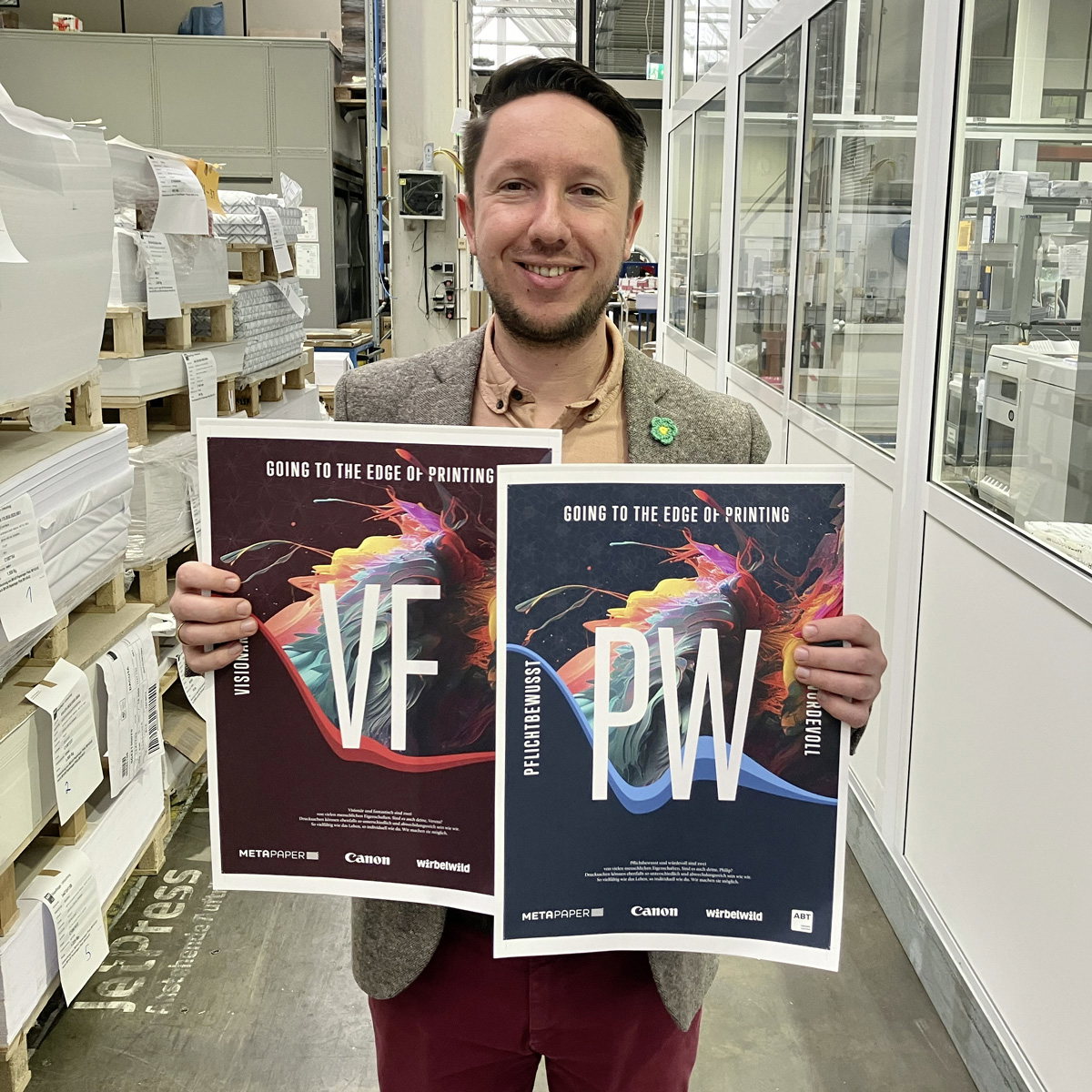
Tobias Köngeter (LinkedIn profile page) is a seasoned printer, designer and software specialist based in Stuttgart (Germany). Through the print design software ManyPrint Solutions, his company WirbelWild, co-owned by his wife Deborah Köngeter, claims to be able to generate unique print products that have never existed before – 100 % digitized, 100 % automated and 100 % personalized.