mastering variants instead of managing print runs
Educational media: Sergio Nobile, Managing Director, Edubook, on success in 1-to-1 digital media printing
Smaller print runs, more versions, tighter deadlines: for teaching-material publishers, production is increasingly a question of managing complexity. What matters is not only how efficiently a book is printed, but how print, finishing, digital formats and ordering processes can be connected without turning every additional variant into additional manual work.

Published: 30.9.2026 | Video, all pictures: Edubook.
Complexity has become the real production challenge
Teaching-material publishers, associations, schools and continuing-education institutions rarely deal with one stable product in one predictable print run. Content changes, curricula are revised, quantities fluctuate and digital components create further versions. At the same time, the right material is expected to be available at the right moment, whether three copies or several hundred are needed.
That also changes the logic of economical production. Large print runs are not the only thing that counts. Production environments must equally cope with many small and medium-sized jobs, different formats and bindings, ongoing updates and short-notice reprints.
A project delivered by Edubook in 2026 shows what this means in practice. Within ten days, around 15,900 books in 135 product variants were produced for three educational programmes, with print runs ranging from three to 700 copies. More telling than the total volume is a detail from the planning stage: a single print web sometimes combined more than 75 separate jobs, each of which had to be arranged so that page count, format, finishing and subsequent allocation matched.
Automation needs a well-judged starting point
This kind of production does not become economically viable simply by automating everything. In the project, the webs were deliberately composed manually because incomplete incoming data and tight deadlines required flexibility and planning decisions. Only then did automation take over.
Book blocks and covers were produced on separate systems. Datamatrix codes identified both components, and the workflow checked the match before they were brought together. What a machine operator once had to check manually – does this cover really belong to this content? – became a controlled digital process.
The business value lies above all in process reliability. If dozens of products and thousands of books move through production in parallel, an incorrectly assigned cover is not a triviality. Automation reduces manual checks and at the same time makes the sequence of jobs transparent and reproducible.
Notably, not every step was automated. Bundles were deliberately assembled manually at the end because this preserved the necessary flexibility. The workflow still showed at any time which components had already been produced, which belonged together and which sets were still missing. From this, an important principle for publishers can be derived: automation creates most value where it takes over repetitive coordination, not where it eliminates every manual step at any cost.
Different products require different production routes
Educational media portfolios include coated and uncoated papers, softcovers, hardcovers and very different run lengths. A single production route therefore quickly becomes a bottleneck.
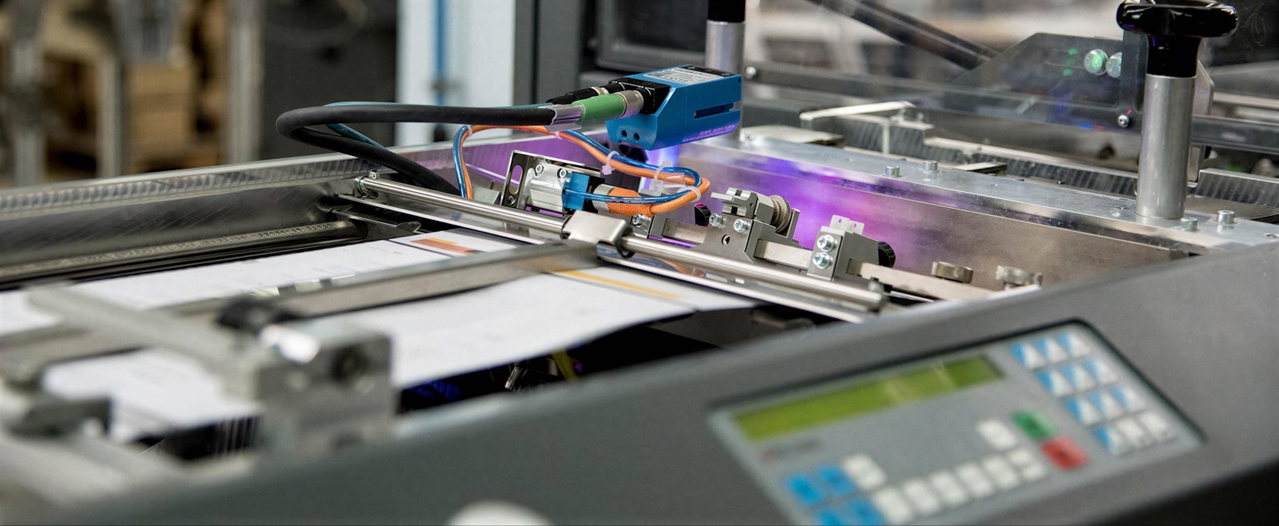
Edubook works with three main digital production routes. Two are based on web inkjet with the Canon ColorStream 8000: one combined with a Tecnau Revolution 50 and a Muller Martini Vareo Pro, the other with a Tecnau Libra 800 and barcode-controlled cover feeding. In addition, there is sheetfed inkjet on a Canon varioPRINT iX3200 with inline CP Bourg perfect binding for hotmelt and PUR.
The iX route supports coated materials and high print quality, while the ColorStream 8000 adds capacity for higher volumes on uncoated offset papers. An automated on-demand hardcover line broadens the spectrum further. For print buyers, the individual machine configuration matters less than the ability to assign very different products to an appropriate process without building a new dedicated workflow for every title.
The overall price level is on a par with the German market. For publishers, the procurement decision therefore involves not only the price per copy but also how flexible, integrated and variant-capable a production model is.
When ordering becomes part of the publishing workflow
A large share of the efficiency is created before the press even starts. Orders and production triggering can be integrated directly into customer interfaces and webshops instead of running as a separate administrative process.
The Klett-owned Swiss publisher Compendio provides print-run planning digitally, allowing orders to be transferred fully automatically into the Edubook system and sent directly to the printing presses. A seamless end-to-end workflow without media discontinuities, fast, efficient and reliable. An Excel export is read automatically and transferred into the Edubook system. In another workflow, an order from Switzerland placed through the HERDT webshop was in production around 40 minutes later.
Such examples are particularly relevant for educational media because reprints and updated editions occur frequently. If every order has to be re-entered, checked and transferred manually, small print runs can become administratively expensive even when printing itself is efficient. Connecting publisher systems directly with production reduces these repeated handovers.
Print and digital should not be separate problems
Printed teaching materials are increasingly supplemented by e-books, learning platforms or other digital content. This further increases the number of variants – and synchronisation becomes part of the production task.
In comes edubase.ch, the ebook repository in which an ebook can be generated automatically, including an individual download code. At florist.ch, a print order placed through the webshop is combined with the automated dispatch of an individual ebook version.
For publishers, associations, schools and continuing-education institutions, this is relevant wherever a printed product and a digital entitlement belong together. Operationally, it is then no longer just a matter of manufacturing a book, but of providing physical and digital components in the right combination and at the right time.
Small print runs can reduce stock risk
Digital production also changes the relationship between print run and inventory. Print runs geared more closely to actual demand can reduce overproduction, stock levels, waste and unnecessary transport.
This is particularly interesting where curricula change, content is updated frequently or demand is difficult to forecast. Instead of committing to large quantities early, publishers can produce smaller batches and adjust when required.
For foreign publishers with business in Switzerland, there is a further practical aspect: local production can save the time otherwise required to export already printed media into Switzerland.
The procurement question is changing too
For print buyers, the selection of a production partner therefore becomes broader than a comparison of price per copy. What increasingly matters is how many variants a workflow can control reliably, how quickly reprints can be triggered, which materials and bindings are covered, how digital products are integrated and how much manual coordination remains on the publisher’s side.
The described case is useful precisely because it does not have to deliver a hero story. Its individual details expose everyday structural problems: more than 75 jobs on one print web, covers and contents that must be matched without error, bundles that deliberately require flexible manual work and print runs fluctuating between three and 700 copies.
The common denominator is not speed for its own sake. It is about making growing product variety manageable, reproducible and economically viable.
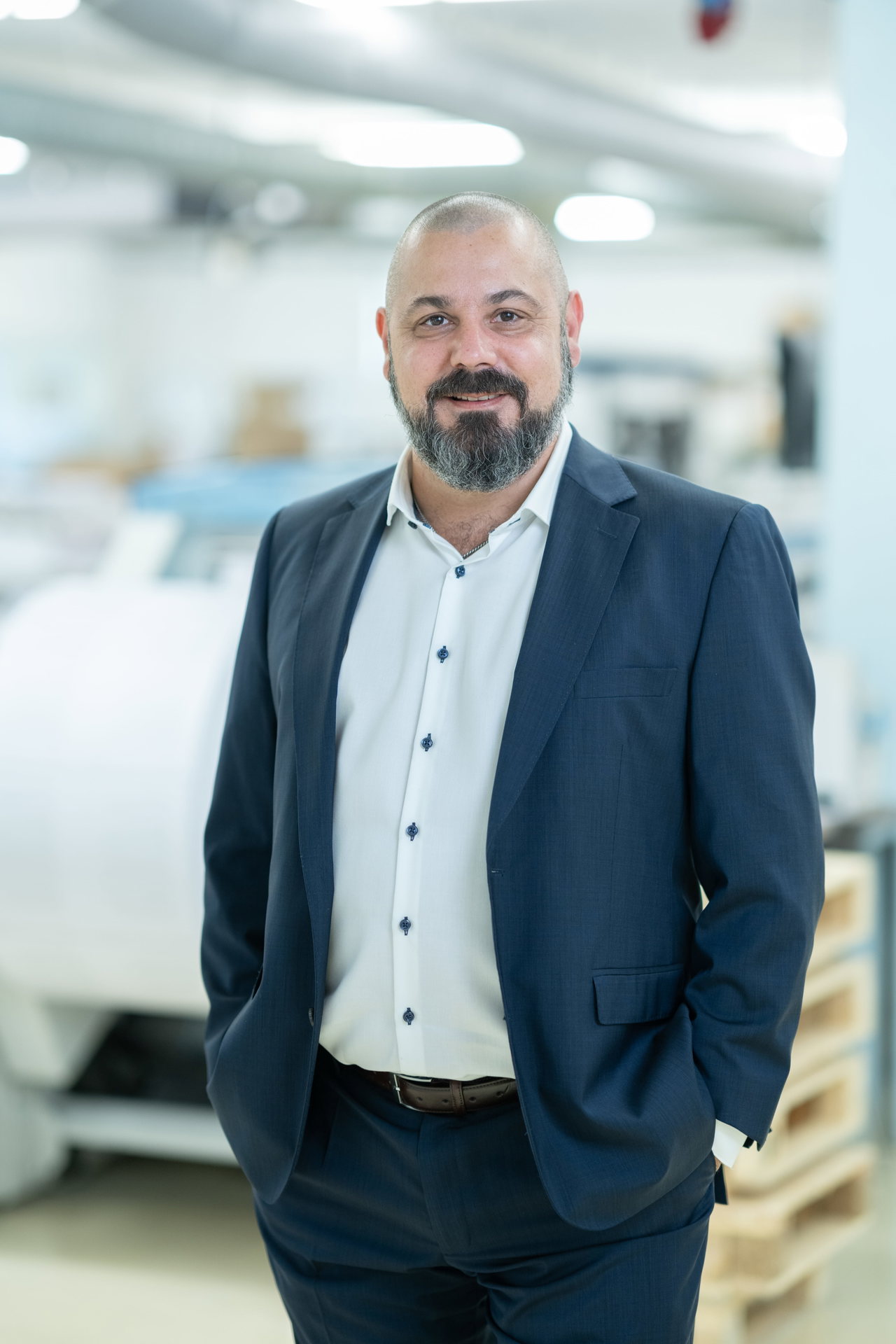
Sergio Nobile (LinkedIn profile page) is Managing Director and owner of Edubook AG, an industrial digital printing company based in Merenschwand, Switzerland. He has been part of the company’s management since its founding, took over as Managing Director in January 2019 and later became sole owner. His work focuses on inkjet production and on automated workflows for digital print media, in particular print-on-demand setups that allow publishers and education providers to produce textbooks, catalogues and brochures efficiently down to a run of a single copy.