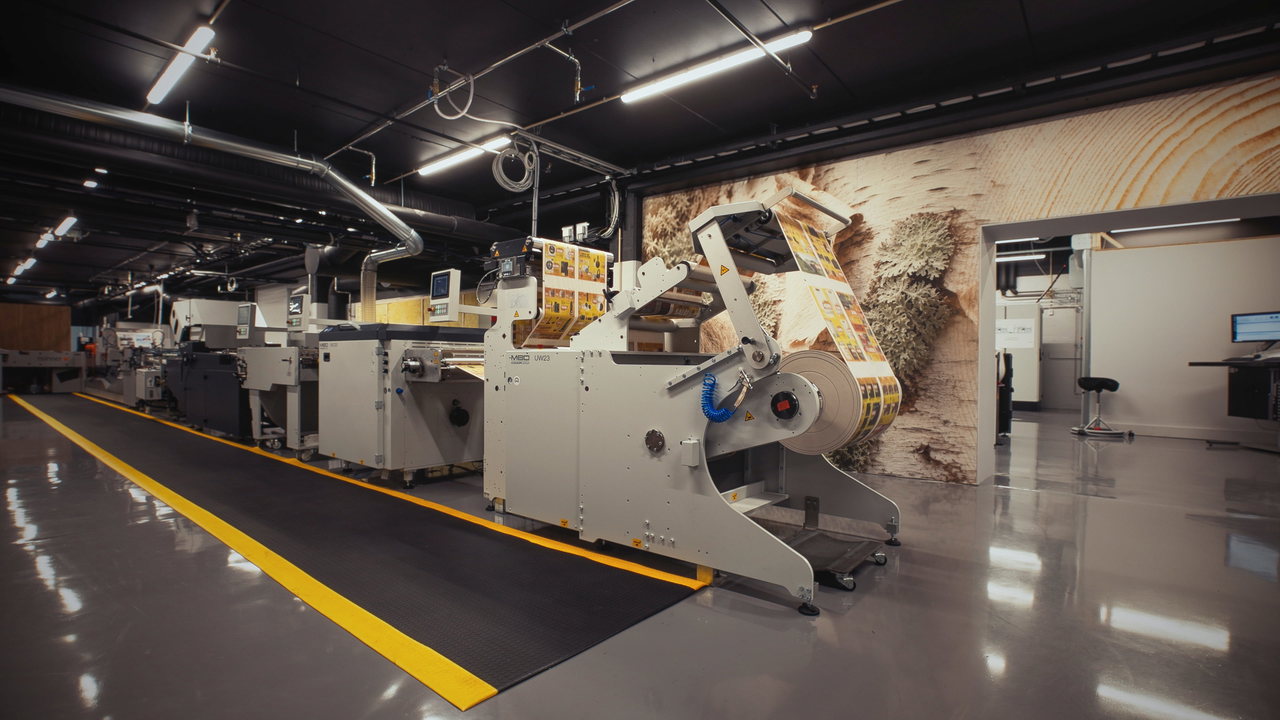
“print does not have to be a story of managing decline.”
Scandinavia’s leading newspaper publisher Amedia makes the one-to-one newspaper come true
At the twenty-twenty-six publishing gatherings, Amedia Trykk’s bold transformation of newspaper production became a central topic of discussion. Operating as the print and logistics powerhouse behind Amedia – Norway’s largest local media house – it faces the daunting task of delivering over 80 newspaper titles across a vast, mountainous terrain. In this conversation, Morten Kringler, CEO of Amedia Trykk, outlines how replacing massive offset presses with Canon’s highspeed digital inkjet technology eliminates setup waste and enables carrier-ready, personalised print runs – proving that even in a digital-first era, smart production technology can secure a sustainable future for physical local journalism.

Published: 24.9.2026 | All images: Amedia Trykk
Give us an impression, please, of what it means to edit, print and distribute newspapers in a thinly inhabited, big and above all, long country like Norway!
Operating in Norway presents unique geographical and logistical challenges. With a population spread across a long, mountainous country, maintaining efficient printing and distribution requires a highly structured strategy. We manage around 81 local newspaper titles with an annual print volume of approximately 30 million copies. To make this financially and operationally viable, we strictly coordinate press schedules with logistics networks and regional transport departures, using dynamic deadlines and page-count logic to maximise capacity and minimise setup times across our print facilities.
The corporation Amedia Trykk is part of what was the socialist Norsk Arbeiderpresse. Where is this heritage still functional in your company?
Today, Amedia and Amedia Trykk have moved on from that historical political legacy – the traditional connection to Norsk Arbeiderpresse is no longer relevant to how we operate or position ourselves. Instead, our modern identity and core mission revolve strictly around our broad social mandate: securing the lifespan, independence and viability of local journalism across Norway regardless of political affiliation. What remains deeply embedded in our culture, however, is a strong Scandinavian tradition of workplace collaboration, close dialogue with our teams and our operational core values – being solution-oriented, dutiful and available.
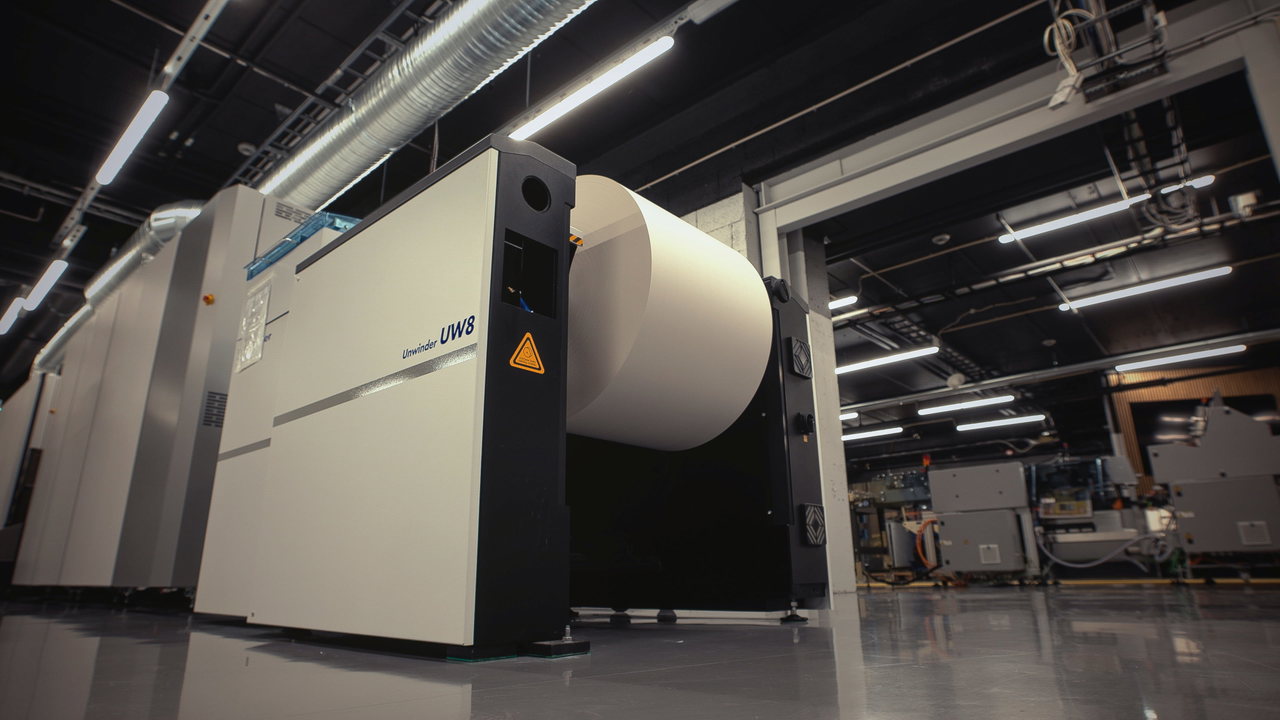
From declining print runs to a new production model
When did you become aware for the first time of the challenges print-run-driven news publishers face in an age of digitisation of the information and advertising businesses?
The shift has been gradual but steady over the past decade as reader habits moved online and print circulation faced continuous decline. In traditional coldset printing, fixed costs represent the majority of operations, meaning that as print runs shrink, unit costs inevitably rise if press capacity is not fully optimised. We realised early on that relying solely on legacy offset volume was not sustainable in a digital-first media landscape where audience preferences and advertiser demands are rapidly shifting.
Did Amedia react to these challenges in a specific way?
Yes, Amedia adopted a clear group strategy where Amedia Trykk’s core mandate is to support the market development of our local media houses by managing the net printing costs per title.
To achieve this, we optimised our print plant network, flattened production peaks using dynamic deadline management and maximised capacity utilisation by serving commercial clients and external publisher titles. Throughout this internal turnaround, maintaining flawless execution for our external customers was a top priority – ensuring we remained a reliable, highly attractive partner in the market while transforming our own operations.
When did you realise that the usual recipe of cutting print runs and staff alone leads nowhere?
Cost-cutting alone eventually hits a hard floor; you cannot cut your way to long-term growth. We truly recognised the need for a technological shift when we saw that our press operators were spending significantly more time on setup, plate changes and prepress adjustments than on actual print runs. When setup and changeover times exceed actual running time, traditional coldset presses simply become economically inefficient for lower volumes. That was the tipping point – it was clear that scaling down was not enough, and that we needed a flexible technological platform built specifically for short runs and rapid transitions.
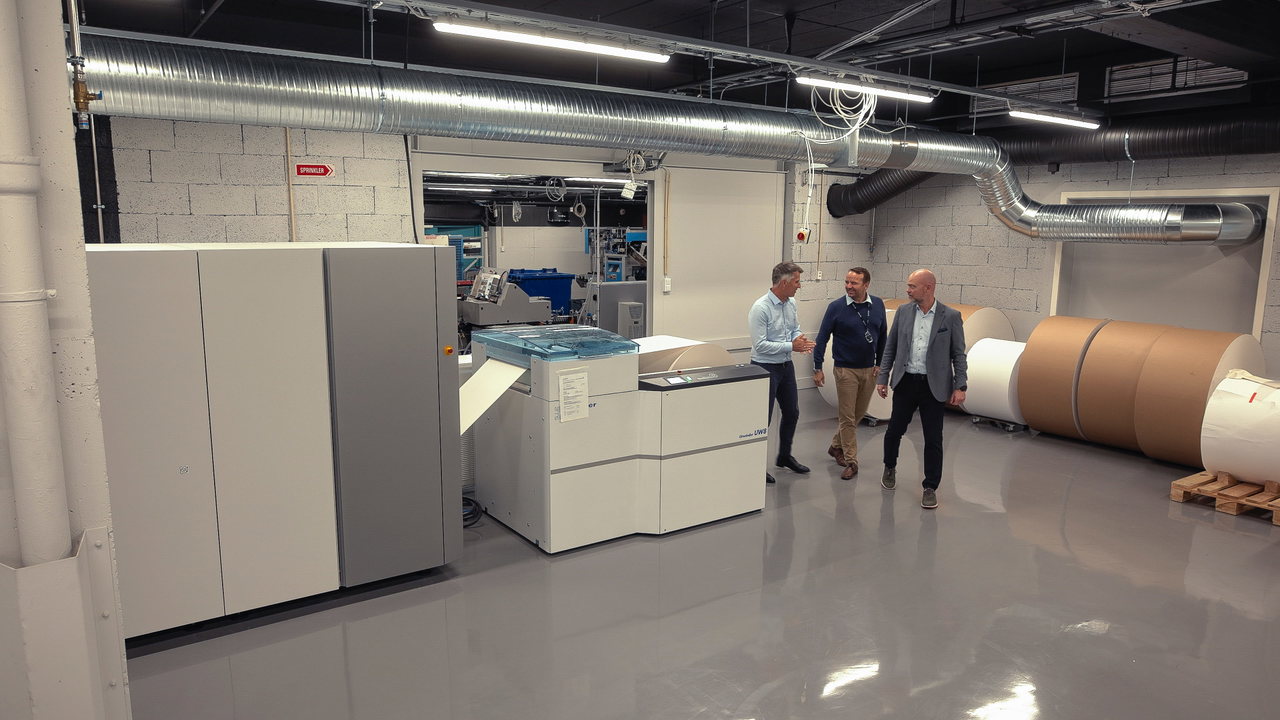
Why digital inkjet printing changes the economics of newspapers
What convinced you that digitally printed newspapers might be part of an economically – not to mention ecologically – sound future of news companies?
Digital printing offers unprecedented operational flexibility while drastically reducing our environmental footprint. Ecologically, highspeed inkjet technology significantly reduces energy consumption compared to powering heavy web offset presses, while cutting paper waste and startup overspray by more than 90 percent.
Economically, as print runs grow smaller and micro-zoning or personalisation increases, digital printing removes the need for expensive physical plate changes and long prepress setup times. It allows us to print exact quantities on demand, avoiding overproduction and optimising both paper usage and transport logistics.
How strong was Amedia Trykk’s economic position then?
Amedia Trykk maintained a solid market position with around 400 million NOK in turnover, holding around 30 percent market share of newspaper print paper consumption in Norway. Commercial printing and external publishing services accounted for roughly 40 percent of our total revenue, which provided us with the financial stability and strategic leverage to invest in new technology and explore future-proof innovations.
Can you describe the goals which guided your lookout for newspapers printed digitally?
Our main goal was to eliminate the heavy downtime between productions and radically lower setup time. When setup time outweighs press running time, you need a technology that allows instant job changes without physical plate swaps.
Crucially, we needed a solution capable of printing directly on our standard 42 g newsprint paper to maintain cost-efficiency and supply chain consistency. Furthermore, scalability was essential – we required a digital setup where print runs and production costs can adjust dynamically in step with modern subscription trends, ensuring long-term financial stability as readership evolves.
The explorative journey you led ended with Canon. Why?
For us, this decision went far beyond simply buying a piece of machinery – it was about entering a long-term strategic partnership. Canon demonstrated not only the technical maturity and paper-handling capabilities required for highspeed newsprint production, but also a deeply committed service and support organisation.
When running a daily news operation with tight deadlines, having a reliable service apparatus and a local partner who shares responsibility for uptime and continuous operational development is essential. Canon proved they were ready to take that journey alongside us as a true partner.
Canon equipment is now running in the shopfloor of the Oslo printshop. One of the two coldset web printers had to leave. What did that all mean for your staff?
It marked a fundamental modernisation of our pressroom environment. Transitioning to highspeed digital printing allows us to operate with a leaner staffing structure while giving our teams far greater operational flexibility across titles and shifts.
For our staff, this shift elevates their daily work – moving away from heavy mechanical labour, ink handling and constant plate changes toward managing advanced digital automation and quality control. By replacing legacy equipment with state-of-the-art technology, we have created a much more attractive, modern and future-proof workplace for our operators, demonstrating that print is evolving rather than simply winding down.
Everybody knows that printing digitally is more expensive than coldset. It’s not a sufficient answer to all run-length-related economic constraints. So you had to think of something else yet … When did this happen?
You have to look at the total cost of ownership and operations, not just the isolated consumable or paper cost. When you view the whole picture, digital printing changes the entire financial equation.
While ink and paper per page might be higher than traditional offset, digital printing radically reduces overall operational overhead. It enables significantly leaner staffing, cuts electricity consumption and requires only a fraction of the floor space compared to massive coldset web presses. When you factor in saved facility costs, lower energy bills, reduced man-hours and zero setup waste, the overall unit economics become highly competitive – especially for declining print runs and targeted regional editions.
Did you go anywhere for specific advice on one-to-one newspapers or did this innovative concept wholly originate from within your team?
The vision was developed internally within our own team, but it was built on years of continuous research and market monitoring. Internally, we have been closely tracking highspeed digital printing technology for many years, maintaining an ongoing, active dialogue with equipment manufacturers to monitor performance milestones, paper capabilities and financial viability.
As Norway’s largest publisher of local news with over 80 titles, our team deeply understands subscriber data and local advertising dynamics. By combining our internal operational insight with the evolving technical capabilities we explored together with the vendors, we were able to pioneer a tailored concept for personal and hyper-local print production.
Traditionally, the staff have a strong say in Scandinavian corporations. How did you convince teams and leaders to hail the idea of digitally printed personal newspaper?
In the Scandinavian corporate tradition, transparency and involvement are key. We engaged union leaders and team members early by framing digital printing not as a threat to press operators but as a survival strategy that secures jobs and extends the life of physical print media. Showing them how digital technology opens up new commercial avenues built strong internal ownership.
Doesn’t heavy personalisation risk ruining the curated reading experience that print subscribers love and further threaten to divide the population as people stay in their respective echo chambers?
First of all, deep personalisation is a strategic opportunity we are actively exploring for the near future, not something we are deploying across the board today. When we do move in that direction, our primary goal will be to add tangible value for the reader, not to create algorithm-driven echo chambers. It is important to do this step by step.
The core, curated local journalism and editorial integrity will always remain the heart of the newspaper. Future personalisation will be about providing relevant hyper-local inserts, community-specific news pages or targeted local advertising—enhancing the subscriber experience while preserving the shared community identity that local print newspapers represent.
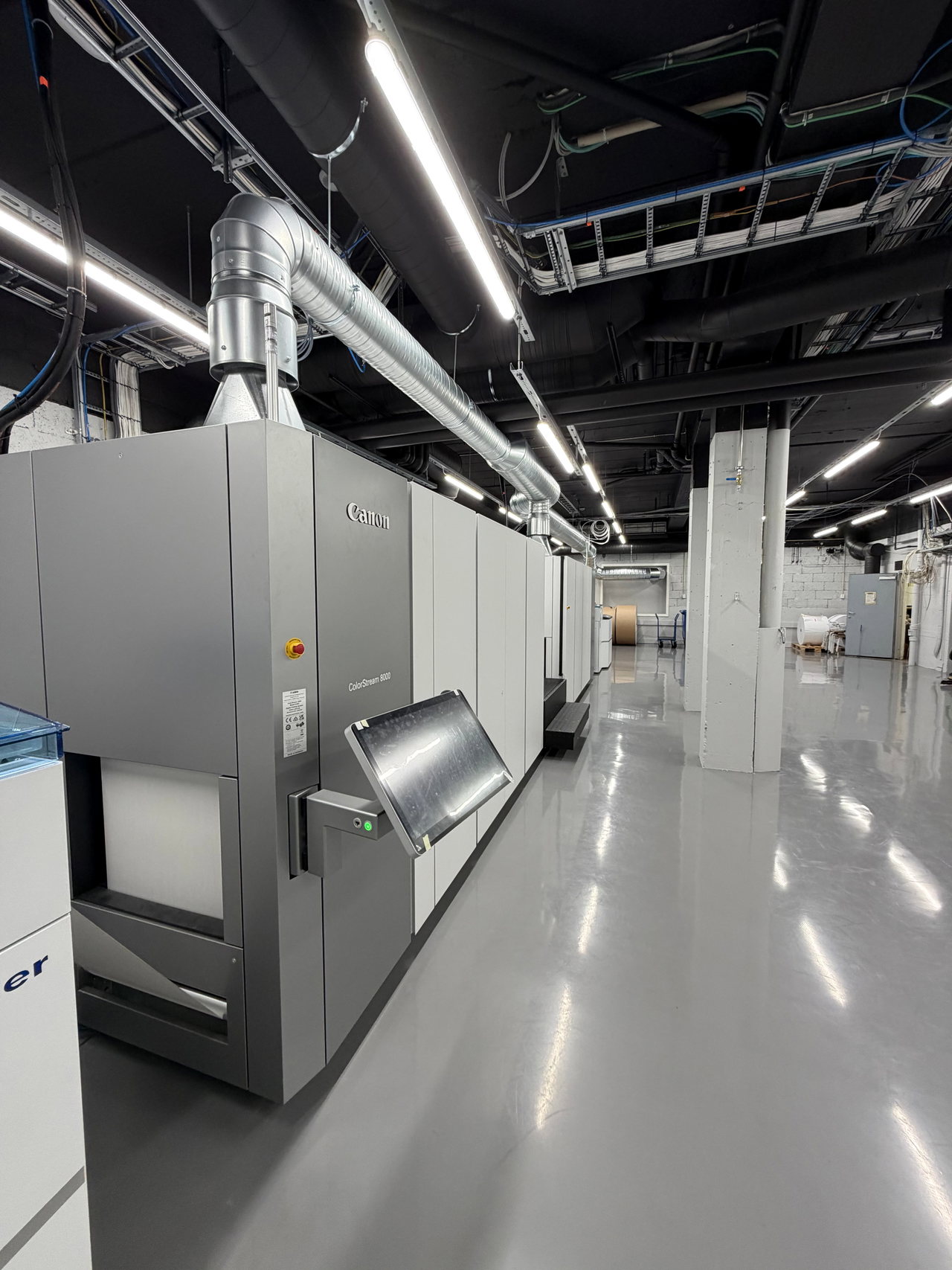
From pressroom modernisation to carrier-ready distribution
Where exactly will you start personalisation?
Our immediate first step focuses on optimising for distribution to drive cost savings and significantly improve delivery quality. Before jumping into deep content personalisation, the real game-changer lies in logistically smart production.
Our goal is to print and package mixed newspaper titles directly out of the digital line—pre-sorted and bundled in exact carrier walk order. By producing carrier-ready, multi-title bundles straight from the press, we eliminate manual sorting steps in the distribution chain, reduce handling errors and drastically cut overall logistics costs.
What do you expect to be the biggest specific challenges in the whole process of editing, printing and distributing these papers?
The main challenge is synchronising data flows between subscriber registries, prepress systems and the finishing equipment in real time. Because our immediate goal is to produce mixed titles pre-sorted in carrier walk order directly from the digital line, the software and control systems must perform flawlessly.
Every single paper in a sequence might belong to a different title or variant, so ensuring absolute precision in automated page assembly, variable cutting, stacking and bundling at full press speed is crucial. Aligning these automated physical outputs perfectly with daily route data from distribution partners is where the core operational focus lies.
In what ways will the pressroom teams’ work be affected?
The pressroom teams’ work evolves from traditional, heavy mechanical press handling into managing highly automated digital production and logistics workflows. Rather than spending hours on manual ink adjustments, plate mounting and waste cleanup, our operators are stepping into advanced technical and supervisory roles.
Because the new digital line automatically handles multi-title production and carrier-ready packaging directly from the press, the operational focus shifts toward software monitoring, dynamic job control and automated finishing systems. This transition enables a leaner, more agile staffing structure while transforming the pressroom into a modern, physically lighter and far more attractive working environment.
About a whole generation of media women and men grew up and were retired with an underlying, constant worry related to shrinking customer loyalty, advertisers’ churn and the resulting economic threats to job security. Will Amedia Trykk blaze the trail to a general end of this worry?
While we cannot reverse the overall shift toward digital media, we are proving that print does not have to be a story of managing decline—it can be a platform for growth and product innovation.
By completely restructuring our cost equation—dramatically reducing energy consumption, eliminating startup paper waste, cutting floor space and automating distribution straight from the press—we have stabilised the foundation. More importantly, this technology allows us to evolve the print medium itself. We can now develop completely new, flexible print formats and targeted products for both our existing publishing partners and new commercial customers, replacing industry anxiety with an active, commercial future for print.
What is the main piece of advice you would give a peer attempting this same leap?
Look beyond the press itself and see the entire value chain as an opportunity for product development. Digital printing is not just a tool for lowering setup times and running short runs; it is a platform to rethink what print can deliver to the market.
My advice is to align your whole organisation around this flexibility—from prepress workflows and pressroom operators to your commercial sales teams. Use the new capability to create value-added, tailored print products for existing readers while actively pitching agile, high-quality print solutions to new commercial clients who previously found traditional coldset.
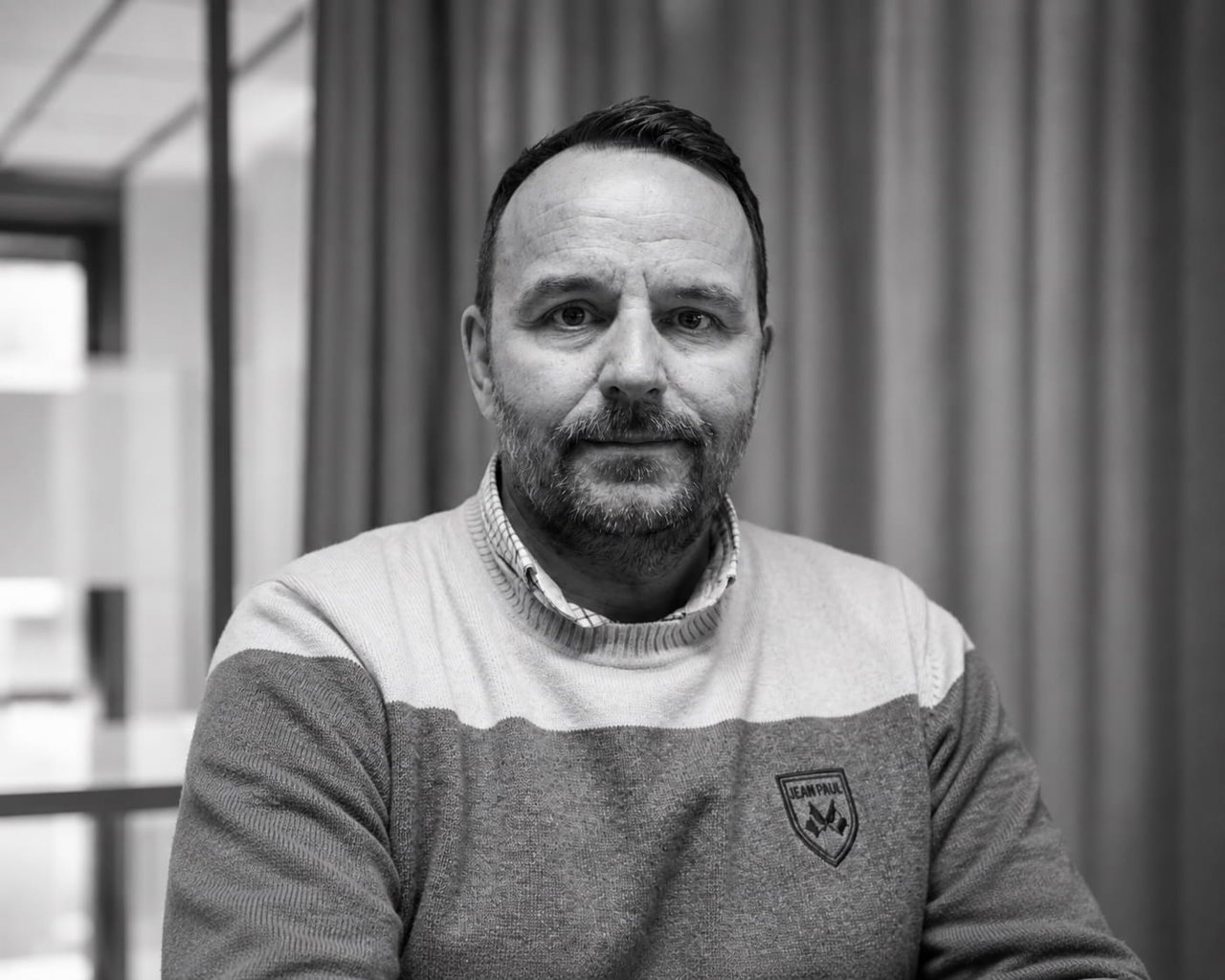
Morten Kringler (LinkedIn profile page) is an executive in the Norwegian media production industry, serving as CEO of Amedia Trykk. His career demonstrates long-term continuity within the print and media production sector, having progressed through technical, operational and executive leadership roles across related organisations, including Media Øst, Nr 1 Trykk and Amedia Trykk. Holding previous positions as Technical Manager and Operations Director, Kringler has consistently focused on organising, innovating, optimising and overseeing core business processes, technical workflows and production management within media printing infrastructure.